
Flooded Basement Cleanup Saint Clair Shores MI
Combined sewers, a lakefront basin and 1950s basements: what floods homes along Lake St. Clair.
Sewage coming up through the floor drain after a storm? Our flooded basement cleanup Saint Clair Shores MI crews stop the source, extract the water and dry 1950s basements to IICRC S500/S520 standards, with a 60-minute response target and a written estimate before work starts.
Why St. Clair Shores Basements Flood the Way They Do
St. Clair Shores sits at the bottom of the drainage system. Large parts of the city, along with Eastpointe, run on combined sewers that carry rain and household sewage in the same pipe toward a county basin on the lake. During a hard storm those pipes fill fast, and the lowest opening in many homes is the basement floor drain.
That is why most of our calls here start with dark water around a drain rather than a damp wall. A flooded basement cleanup Saint Clair Shores MI job usually means Category 3 black water, which is handled as sewage from the first minute. We confirm the source, stop it where we can, then extract, clean, disinfect and dry.
Not every wet basement here is sewage. Sump failures, cracked foundation walls, leaking water heaters and seepage near the lake all show up too. The difference decides the cleanup method, the cost and who may be responsible, so we sort it out before any equipment goes down the stairs.
The Chapaton Basin at Nine Mile and Jefferson
Most of St. Clair Shores drains to the Chapaton Retention Treatment Basin at 23001 Nine Mile Road, at Jefferson, run by Macomb County Public Works. It was built in the late 1960s as a 28-million-gallon basin. The county says it serves about 44,782 residents across 4,745 acres of Eastpointe and St. Clair Shores, with seven pumps rated for 693,000 gallons per minute during storms.
On a normal day, combined flow from the two cities heads toward the Connor Creek pump station in Detroit. When the storm is too big, Chapaton holds what it can, treats the overflow and releases it into Lake St. Clair as a combined sewer overflow (CSO). Chapaton discharged seven times in 2019, and a January 11, 2020 storm sent more than 60 million gallons of CSO into the lake.
Another part of the city drains to the Martin Retention Treatment Basin at 22301 Bon Brae. It was built in the late 1960s as an 8.6-million-gallon basin, and the county says it serves about 69,354 people in Roseville and St. Clair Shores. If you live near the Roseville line, our Roseville basement flood cleanup page covers the same district from the other side.
In September 2025, county and state officials unveiled a new 17-million-gallon basin at the Chapaton site, about 700 feet long and 16 feet deep, built for roughly $29 million and expected to cut CSOs by 50%. A separate $16 million upgrade added three 2-megawatt generators to replace electrical gear dating to 1968. More storage helps. It does not stop a 4-inch cloudburst from backing up a private sewer lateral.
Storms That Put Water in St. Clair Shores Basements
The same pattern has repeated for more than a decade: a burst of heavy rain, a system already near capacity, and sewage or storm water coming up into basements across the city. These are the events with the clearest public record.
| Date | What happened |
|---|---|
| August 11, 2014 | The National Weather Service recorded 4 to 6 inches of rain in about four hours across Wayne, southern Oakland and Macomb counties. FEMA declared disaster DR-4195 on September 25, 2014, and Macomb was one of the three counties approved for individual aid. |
| Summer 2016 | Backups on July 8 and August 15 and 16 led residents of Beste and Elizabeth streets to file a class-action suit against the city in January 2017. |
| June 25 and 26, 2021 | Nearly 4 inches fell on St. Clair Shores and Eastpointe while the Connor Creek station in Detroit was shut down. The county opened the Chapaton emergency bypass to the lake for the first time in many years. |
| August 2, 2024 | Macomb got over 3 inches. The city's Algiers storm pump station lost power for a little over an hour, and Chapaton again used its emergency bypass. Under 125 homes reported flooding, by preliminary city figures. |
| July 28, 2025 | The National Weather Service reported 4 inches in two hours. Basements flooded across most of the city, and crews worked overnight to clear streets. |
Two things stand out. First, rain intensity matters more than the daily total, because the pipes cannot drain a 2-hour downpour as fast as it falls. Second, the county has said more than once that opening the bypass kept sewage out of thousands of basements in St. Clair Shores and Eastpointe. When it is not enough, homes on the low end of a branch line take the water.
Sewage Backup Cleanup in St. Clair Shores
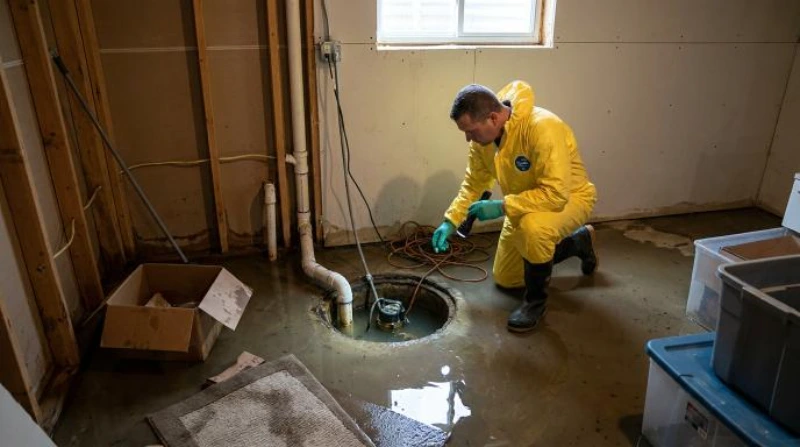
Sewer water is Category 3 under the IICRC S500 standard. It carries bacteria and debris, so our crews wear full protective gear and do not bring anything from your basement upstairs. You should keep children and pets out of the area entirely. Our sewer backup cleanup process in St. Clair Shores runs in this order:
- Shut off power to wet circuits and confirm it is safe to enter.
- Pump out standing water and solids, then extract what is left in carpet and pad.
- Remove porous materials the sewage touched: carpet, pad, the lower section of drywall, insulation and most cardboard and fabric.
- Clean all hard surfaces and apply an antimicrobial to the slab, walls and framing.
- Set LGR dehumidifiers and air movers, then log moisture readings daily until the materials reach dry standard.
Black water that sits more than a day or two raises the odds of mold growth, which the EPA says can start within 24 to 48 hours. Our guide on mold after a basement flood in Michigan explains what to watch for once the floor looks dry.
Basement Water Removal in St. Clair Shores' 1950s Homes
St. Clair Shores grew almost overnight. The city had 19,823 residents in 1950 and 76,657 by 1960. Census survey data from 2019 to 2023 puts the median home at 1957, with about half of all housing units built in the 1950s alone. About 82% are single-family detached homes, and roughly 83% are owner-occupied.
That age shows up in the basement. Here is what we run into most in St. Clair Shores homes of that era.
Floor drains with no protection
Many original basements have a floor drain tied straight to the sewer lateral with nothing to stop flow from reversing. A backwater or check valve lets water leave but closes when the main surcharges. Our page on check valve installation explains how they work and when one makes sense.
Old clay laterals and tree roots
A 2016 engineering review for the city pointed to tree roots and grease as major contributors to backups. The city responded with a sewer cleaning program of about $3 million, aimed at cleaning every main at least once every five years, and inspected the whole system in 2017 and again in 2022. The main is the city's job. The lateral running from your house to that main is yours, and the city's own advice is to have it snaked routinely.
Finished rec rooms
Plenty of 1950s ranches and bungalows here have paneled rec rooms, built-in bars and drop ceilings that were added decades later. Paneling over furring strips hides wet framing and lets mold grow out of sight. We check behind it with moisture meters and thermal imaging instead of guessing.
Downspouts tied back in
City ordinance prohibits connecting downspouts to the sewer system, yet a 2016 spot check found several houses that appeared to have reconnected them. Every gutter tied to the sewer pours roof water into the same pipe that has to carry your neighbor's sewage. If you have one, ask a contractor to redirect it to the yard.
Canal Homes, High Lake Levels and Seepage
St. Clair Shores faces a different threat on its east side. In May 2020, Lake St. Clair averaged 2.75 feet above its long-term average and 3.5 inches above the record high. The city declared a high water emergency on May 1, 2019, set up sandbag sites at the DPW yard on Pleasant, the Civic Arena on Stephens and the parks on Jefferson, and limited residents to 100 bags at a time. Council members said the lake had not been that high since 1986.
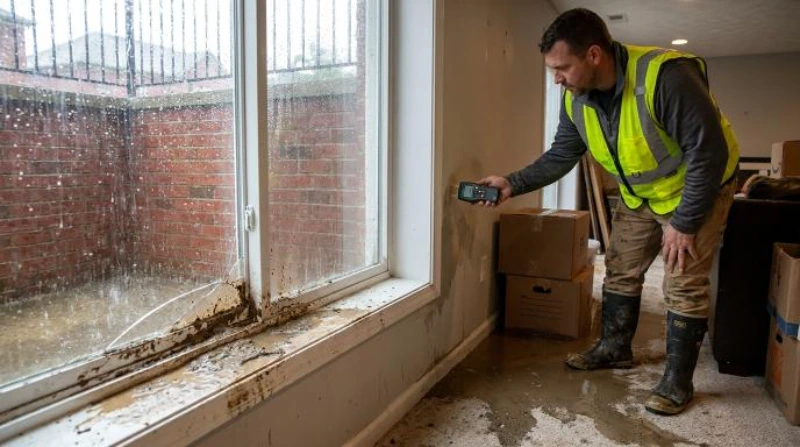
During that period, canals off Jefferson were reported nearly full, with only inches to spare, and the city manager warned that a 25 mph east wind alone could push water up another 2.5 to 3 inches. In at least one case water topped a seawall and flooded two neighboring lots. For homes along the canals, a high lake can keep the ground around the foundation wet for weeks, so seepage through the cove joint and wall cracks is more likely than in a dry year.
Lake water and canal water are not clean water once they cross a yard. We treat intrusion from outside as at least Category 2 and check the water damage categories against what we find on site. If your home is in a mapped flood zone, an NFIP flood policy may cover surface water that a homeowners policy will not.
Reporting a Backup and the 45-Day Claim Window
If you think the city sewer backed up into your house, report it right away. The St. Clair Shores Department of Public Works is at (586) 445-5363. After hours, the city directs water and sewer emergencies to Police Dispatch at 586-777-6700. Reporting lets the city check its main and the lead to your house, and it starts a record of the event.
Under Michigan Public Act 222 of 2001, a claim against a public entity for a sewage disposal system event must be made in writing within 45 days of when you discovered the damage. The city has described its process this way: report to DPW, allow an inspection, then file a claim with the finance department so the city's insurer can decide on liability. After the July 2025 storm the city also posted a File a Flood Claim page on its website.
The PA 222 clock runs while your basement is still drying. To recover, a claimant generally has to show a defect in the public sewer that the city knew or should have known about and failed to fix in a reasonable time. Photos, dated moisture logs and a list of damaged items help, so we start documenting the moment we arrive.
A city claim is separate from your own coverage. Many standard homeowners policies leave out sewer backup unless you bought an endorsement or rider. Our guide on whether homeowners insurance covers basement flooding in Michigan walks through the usual exclusions, and calling your carrier the same day protects that claim too.
St. Clair Shores Basement Flood Cleanup Costs
Because so many calls here involve sewage, St. Clair Shores jobs tend to land in the middle and upper ranges below. These are typical ranges from our work, not quotes:
| Situation | Typical range |
|---|---|
| Clean water, small unfinished basement | $500 to $1,500 |
| Sump failure (Category 2), unfinished | $1,500 to $4,000 |
| Sewage backup (Category 3), unfinished | $3,000 to $8,000 |
| Finished rec room with sewage | $7,000 to $18,000 |
| Mold remediation, when needed | Adds $1,500 to $5,000 or more |
Scope grows with time, because wet drywall wicks higher and padding holds water longer each day. You get a written estimate before work starts, and the rate is the same at night and on weekends. On any flooded basement cleanup Saint Clair Shores MI call, and any water damage restoration in St. Clair Shores, the fastest way to keep the bill down is to get the water out the same day.
Where We Work in St. Clair Shores
Our crews cover all three St. Clair Shores ZIP codes, from the Eastpointe and Roseville lines out to the canals and the lakefront.
Nautical Mile & Nine Mile
The roughly one-mile stretch of Jefferson between 9 and 10 Mile, with marinas, canal homes and the Chapaton basin at its south end. Sewer backups and lake seepage both show up here.
Blossom Heath
Around the 1911 roadhouse off Jefferson that the village bought in 1946. It became the city's recreation center in 1957. Basements on the lakeside streets nearby can take water from sewer surcharge and from a high lake.
Central Shores & Lakeview
The middle of the city around City Hall at 27600 Jefferson and the Lakeview school district. Street after street of post-war homes, many still with the original basement floor drain.
North End & Lake Shore
The north side near Veterans Memorial Park at 32400 Jefferson and the Lake Shore district, up to the Clinton Township and Harrison Township lines.
Harper Corridor
The western side of the city along Harper Avenue and the Roseville border, far from the lake. Flooding here is almost always sewer surcharge or sump failure, not lake seepage.
We also work across the rest of the county. See our pages for flooded basements in Warren and Clinton Township basement cleanup, or read the Macomb County basement flooding guide for how the county's drain districts fit together. Every flooded basement cleanup Saint Clair Shores MI job is handled by the same IICRC-certified team behind our flooded basement cleanup in Dearborn, serving Michigan homeowners since 2019. Call (866) 838-7745 any hour, and we will tell you what we expect to find before we arrive.