
Flooded Basement Cleanup Allen Park MI — 24/7
Sewage or storm water in your basement? Allen Park shares the Rouge River watershed and CSO network with Dearborn. Our flooded basement cleanup Allen Park MI crews respond 24/7 with the same IICRC S500 protocol and a 60-minute response target.
Flooded Basement Cleanup in Allen Park — Wayne County's Flood-Prone Suburb
Allen Park sits south of Dearborn on the same combined sewer overflow network that floods basements across Wayne County during heavy rain. The city drains into the lower Rouge River watershed — the same system that overflowed during the FEMA Disaster 4607 event in June 2021 and continues to be stretched beyond capacity during any storm exceeding 3.5 inches per day. Our crews dispatch from the Dearborn flooded basement cleanup headquarters on Rotunda Drive, right next door to Allen Park.
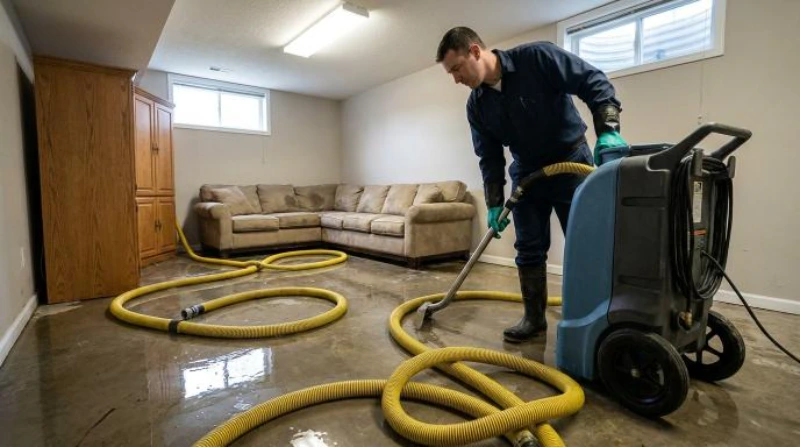
Allen Park homes are predominantly mid-century construction — built in the 1950s and 1960s during the postwar suburban expansion. These homes have the same concrete block foundations, clay tile drainage systems, and floor drain CSO vulnerability as their Dearborn counterparts. During storm events, floor drains in Allen Park basements receive the same pressure reversal from combined sewer overflow that affects Dearborn 48126 and 48124.
Allen Park ZIP code 48101 covers the full city. We respond to all areas within the city 24/7 — same IICRC S500 protocol, same pricing structure, and same 60-minute response target as our Dearborn coverage.
Sewage Backup Cleanup — Allen Park
Category 3 IICRC S500 protocol. Full decontamination — do not enter after floor drain backup. 24/7 response. Written estimate before any work begins.
Sewage Backup Cleanup →Basement Water Removal — Allen Park
Industrial extraction removes standing water and embedded moisture from concrete block and subfloor joists. All water categories handled.
Water Removal →Sump Pump Failure — Allen Park
Power outages during storms knock out pumps just as pits fill. Category 2 gray water — extraction, drying, and antimicrobial treatment.
Sump Pump Cleanup →Mold Remediation — Allen Park
EPA confirms mold begins within 24–48 hours. IICRC S520 protocol: containment, HEPA scrubbing, antimicrobial, air quality verification.
Mold Remediation →Allen Park's Flood Infrastructure Context
Allen Park was incorporated as a city in 1957 — squarely within the postwar suburban expansion that shaped the entire lower Rouge River corridor. The housing that went up during that decade followed the same construction standards as Dearborn: concrete block foundations, clay tile lateral drain connections, and ties into the Wayne County combined sewer network. The city sits at a topographic low point between Dearborn to the north and Southgate to the south, which means storm runoff from multiple directions converges here before entering the Rouge River system.
During major storm events that overwhelm the Wayne County combined sewer system, Allen Park basements experience the same floor drain backpressure as Dearborn. The mechanism is identical: one pipe carrying both storm water and sewage fills beyond capacity, pressure reverses, and sewage pushes back through the lowest drain in each home. Allen Park is not served by a separate storm sewer — it is on the same combined network that failed during the June 2021 FEMA 4607 event.
What Makes Allen Park Basements Vulnerable
1950s–60s concrete block construction
The same mid-century construction that defines Dearborn's flood-vulnerable housing stock dominates Allen Park's residential neighborhoods. Concrete block foundations absorb and retain water differently than poured concrete — they hold moisture longer and require professional structural drying to clear.
Combined sewer network connection
Allen Park ties into the Wayne County combined sewer system — the same infrastructure that overflowed during the June 2021 FEMA event and continues to exceed capacity in storms above 3.5 inches per day. Floor drain backflow during CSO events is the primary basement flooding mechanism.
Sump pump failure risk
Power outages during severe storms — the same storms that overflow the combined sewer — kill sump pump motors just as pits fill. Many Allen Park basements have primary pumps without battery backup, leaving them unprotected during the highest-risk weather windows.
Aging lateral drain lines
Clay tile lateral drain lines installed in the 1950s and 60s crack and shift through Michigan's freeze-thaw cycles. Cracked laterals can allow groundwater intrusion in addition to CSO backflow — creating multiple simultaneous entry paths during heavy rain events.
How We Respond to Allen Park Flooding Calls
Allen Park falls within our primary Wayne County response area. A call from Allen Park ZIP 48101 is dispatched with the same 60-minute target and the same fully-equipped crew as a Dearborn call. Our trucks carry Category 3 sewage protocol equipment on every dispatch — we do not send a crew and then return for additional equipment when the category turns out to be sewage. One truck, one call, full protocol available immediately.
Every Allen Park job follows the same IICRC S500 sequence: category identification and safety assessment first, extraction second, structural drying third, decontamination and antimicrobial treatment concurrent with drying, and a clearance document at completion. We photograph all damage from the moment we arrive — the insurance documentation that supports your claim starts before a pump is placed.
Why Wayne County Homeowners Call Us — Not a 1-800 Franchise
✓ Dryout Michigan
- Real person answers — no hold queue
- 60-minute response, Wayne County
- IICRC S500/S520 certified protocol
- Written estimate before work begins
- Insurance documentation from arrival
- No upselling of unnecessary demo
✗ Common complaints about franchise companies
- Callback promised, never comes
- Multiple visits to bring equipment
- Slow — working multiple projects
- Over-demolition to maximize insurance
- Communication gaps during drying
- Family moved to hotel for weeks