
Sump Pump Failure: Michigan Winter Guide
Keep the pit pumping through freezes, ice storms and the spring thaw
Pump silent and the pit rising during a freeze or an ice-storm outage? This sump pump failure Michigan winter guide covers frozen discharge lines, backup pumps, the first hour after a failure and what cleanup really costs.
Sump pumps fail more often in winter than most homeowners expect, and the reasons are different from summer. A pump that ran fine in July can be defeated in January by an ice plug in the discharge line, a three-day power outage, or a sudden thaw that sends snowmelt into a pit that hasn't cycled in weeks. This guide explains each of those failures, how to prevent them, and what to do when one happens anyway. A pump's flow rate is rated in gallons per hour, and that number drops as the pump has to lift water higher.
We are Dryout Michigan, an IICRC-certified restoration company based in Dearborn. Most sump pump failure Michigan winter calls we answer trace back to one of the four problems below, and most could have been caught with a short checklist in November.
Why Sump Pumps Fail in a Michigan Winter
The most common cause of sump pump failure is a power outage, and Michigan winters bring plenty of them. After that, the usual suspects are a frozen or blocked discharge line, an old pump that finally quits under a heavy load, and a float switch that sticks after weeks of sitting still. A wet-dry vac can hold back a small amount of water during an outage, but only if you have power to run it.
The four winter failure modes
- No power. Ice and wind bring lines down, and a standard pump stops the second the power does.
- Frozen discharge. The pump runs but has nowhere to send the water, so it cycles against a blocked pipe until the pit overflows or the motor burns out.
- Worn-out pump. Pumps average about 10 years. A pump near the end of its life often fails on the first heavy thaw.
- Stuck switch or dirty pit. Debris and sediment build up, and a float that hasn't moved in a while can hang up.
Frozen Discharge Lines: The Failure You Don't Hear
A frozen discharge line is the winter failure most homeowners miss, because the pump keeps running. Water pumped out of the pit has to travel through an outdoor pipe, and any water left standing in that pipe can freeze solid. Once the line is blocked, every cycle pushes water against ice.
Frost goes deep here. Michigan's building code requires exterior footings to extend 42 inches below grade, which gives you a sense of how far down the ground can freeze. A discharge line laid a few inches under the lawn, or sitting on top of the snow, is well inside that zone.
How to keep the line open
- Slope it. The outdoor line should run steadily downhill away from the house, with no dips or low spots where water can sit and freeze.
- Use smooth, rigid pipe. Corrugated flexible hose holds water in every ridge.
- Bury it below the frost line where that's practical, or insulate exposed sections.
- Add a freeze guard. This grated fitting near the house gives water a way out if ice or debris blocks the pipe farther along, so it spills onto the yard instead of backing up into your basement.
- Discharge far enough away. Send the water at least 20 feet from the foundation so it doesn't circle straight back into the pit.
- Never use antifreeze in the pump or the line, and thaw a frozen pipe with a portable heater, not a torch.
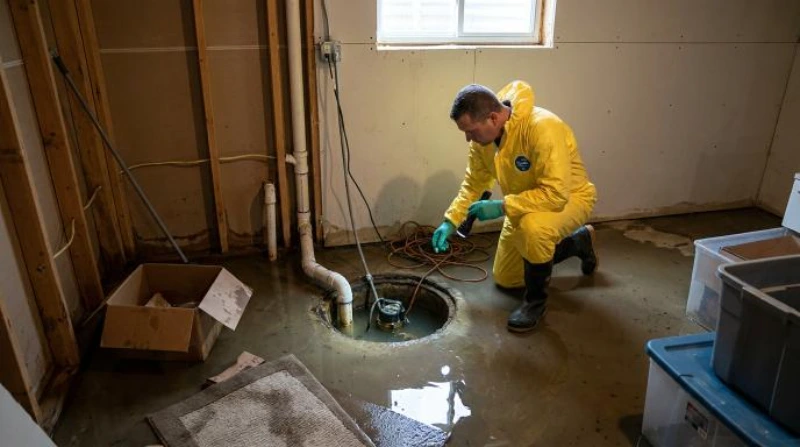
Ice Storms, Power Outages and Your Sump Pump
A power outage stops a standard sump pump cold, and the longer the outage, the more likely the pit overflows. The February 22, 2023 ice storm showed how long that can be: more than 600,000 DTE homes and businesses lost power, another 46,000 lost it after a second storm on February 27, and at least one home in Beverly Hills in Oakland County went about four days without electricity.
Four days is a long time to go without a working pump, especially if the pit was already cycling often before the lines went down. Ice storms also tend to arrive with rain or melting snow, which is exactly when groundwater is rising. That's why a backup pump matters more in Michigan than almost anywhere else in the house.
A portable generator can run a sump pump during an outage if it is set up outdoors, away from windows, with a proper cord. Never run one in the basement or garage.
Battery Backup vs. Water-Powered Backup Pumps
The right backup depends first on your water supply: city water or a private well. Battery backups work on either. Water-powered backups use the pressure in your municipal water supply to pull water out of the pit, so they need no electricity at all, but they can't work without city water pressure.
| Feature | Battery backup | Water-powered backup |
|---|---|---|
| Power source | Deep-cycle battery, recharged when power is on | Municipal water pressure |
| Works during a power outage | Yes, until the battery runs down | Yes, as long as city water pressure holds |
| Works on a private well | Yes | No; a well pump stops when the power does |
| Run time | Limited by battery size, age and how often the pit fills | Not battery-limited |
| Trade-off | Battery needs testing and periodic replacement | Uses city water to move sump water; needs adequate pressure |
Manufacturer specs make the pressure point clear. One common water-powered unit lists an inlet supply range of 20 to 100 PSI and removes about two gallons of sump water for every gallon of city water it uses; its maker states plainly that it will not operate during a power outage if the home has a well pump. Another lists 40 to 80 PSI and a 3/4-inch supply line. Flood damage to the water heater and furnace is common in winter failures, since both sit low near the pit.
For homes on a well, a battery backup is the practical choice. For city-water homes, either works, and some homeowners install both. Whatever you choose, test it before the first hard freeze, because a backup that has never been switched on is a guess.
Snowmelt, Rain on Frozen Ground and the Spring Thaw
The worst sump pump week of the year is often not in deep winter but at the thaw, when snowmelt and rain hit ground that is still frozen and can't soak anything in. That water runs off toward foundations and drains, and the groundwater around the basement rises quickly. Flood risk climbs in late winter, when snowmelt and rain arrive while the ground is still frozen.
Forecasters have flagged this pattern locally. Ahead of a January 2020 storm, the National Weather Service warned that frozen ground could create substantial extra runoff, adding, "We don't normally see two to three inches of rain this time of year." The April 2–3, 2025 storm started with morning snow, light freezing rain and sleet before heavy rain, and the Weather Service reported basement flooding across Metro Detroit.
In Orion Township, a building official tied rising basement water during one spring to a higher water table after a snowy winter. Homes around Lake Orion and Auburn Hills, where a city plan describes river areas that flood after heavy rain or spring snowmelt, are good reminders that the thaw is when a pump earns its keep.
Sump Pump Failure Michigan Winter Checklist
Run through this list in late fall, then check the pump again after the first hard freeze and before the spring thaw. Routine sump maintenance every three to four months, with a fuller service once a year, catches most problems early.
- Test the pump. Pour a bucket of water into the pit and watch it start, empty the pit and shut off.
- Clean the pit of gravel, sediment and debris. Aim for at least every three months.
- Check the float so it moves freely and isn't rubbing the pit wall or the cord.
- Walk the discharge line outside. Look for sags, crushed sections, a missing freeze guard or a buried outlet.
- Test the backup. Unplug the main pump and confirm the backup takes over. Check battery age and terminals.
- Note the pump's age. Around 10 years is a normal life; pumps that run hard may be worth replacing sooner.
- Add a high-water alarm so you hear about a problem before you see it.
- Check your insurance. Sump overflow damage usually needs its own endorsement in Michigan.
That is the whole sump pump failure Michigan winter checklist. It takes under an hour and costs less than a single day of standing water.
The First Hour After Your Sump Pump Fails
If water is already on the floor, safety comes before saving anything. Here is the order we recommend:
- Don't step into water near a plugged-in pump, freezer or furnace. Kill basement power at the breaker if you can reach it from a dry spot.
- Find out why it stopped: no power, a tripped breaker, a stuck float or a frozen outdoor line. A thawed or freed line may restart the pump on its own.
- If the power is out, start the backup or a properly placed generator. If the line is frozen, open or install the freeze guard so water has a way out.
- Photograph the water level, the pit and damaged items before moving anything, for your insurer.
- Move what you can upstairs, and call for extraction. Each extra day of standing water adds real cost and mold risk.
Cleaning Up After a Winter Sump Failure
Water from a failed sump pump is classified as Category 2, or gray water, under the IICRC S500 standard. It has run through soil and the pit, so it carries more contamination than a burst supply line, and it needs disinfection, not just drying. Mold growth can start within 24 to 48 hours after a sump failure, even in a cold basement.
Cleanup follows a set sequence: extraction (usually 2 to 6 hours), removal of wet carpet pad and any drywall that has wicked water, antimicrobial treatment, then 3 to 5 days of structural drying with daily moisture readings. Mold can start within 24 to 48 hours, and winter doesn't slow that much in a heated basement. Our sump pump failure cleanup page walks through each step, and the water categories page explains why gray water is handled differently.
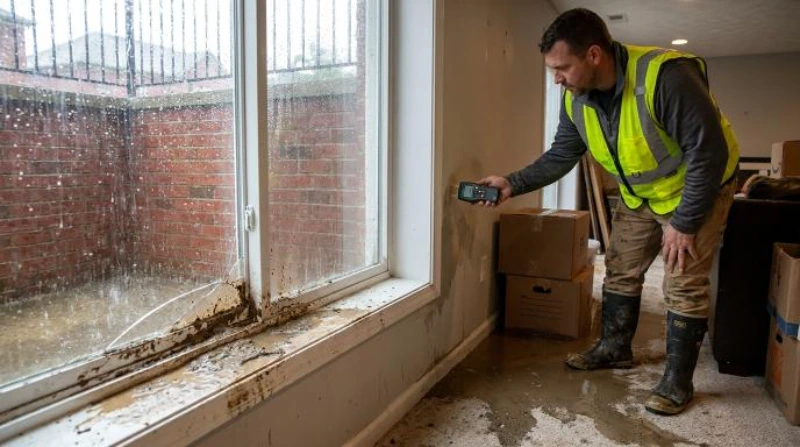
Typical costs
A Category 2 sump failure in an unfinished basement typically runs $1,500 to $4,000. Finished basements cost more because flooring, trim and drywall have to come out. If mold has started, remediation adds $1,500 to $5,000 or more, and every extra 24 hours the water sits adds roughly $1,500 to $3,000 of scope. These are typical ranges from our work, not quotes; you get a written estimate before anything starts. The cost estimator gives a closer number for your basement.
On insurance: Michigan's Department of Insurance and Financial Services says sump pump overflow is not covered by a typical homeowners policy unless you've added an endorsement. Check before winter, not after. Sump overflow usually needs a water backup endorsement before an insurance claim will pay.
Never Connect a Sump Pump to the Sanitary Sewer
Running a sump line into a floor drain, laundry tub or sewer cleanout is tempting when the outdoor line is frozen, but it is the wrong fix. Sump water is groundwater and belongs outside. Pumping it into sanitary pipes adds clean water to a system built only for sewage, and in a big thaw that extra load can help cause the very backups your neighbors are trying to avoid.
It can also cost you money directly. Under Michigan's Public Act 222, a sewer backup does not qualify for a claim against the governmental agency if a sump system, building drain, gutter or downspout connected to the sewer was a substantial cause. Fix the outdoor line instead. Our Oakland County water damage restoration guide covers the 45-day claim process and what the county and cities handle.
Winter Sump Pump Help Across Oakland County
Winter failures look a little different across the county. Northern lake communities like Clarkston and Waterford deal with snowmelt in glacial terrain full of lakes and wetlands. In older housing markets like Royal Oak, where the median home was built in 1956, and Farmington, where it was 1966, a sump pit may have been added long after the house was built, and its discharge line may be a do-it-yourself job worth checking. Newer subdivisions usually have pits from day one, but the pumps in them still wear out on the same 10-year clock. Wherever you are, the checklist above applies.
When a pump does fail, our crew handles sump cleanups across Oakland and Wayne counties from the same team that does flooded basement cleanup in Dearborn. We answer 24/7 with a 60-minute response target, charge the same rate on nights and weekends, and document everything for your insurer from the minute we arrive. Call (866) 838-7745.