
Flooded Basement Cleanup Pontiac MI
Century-old foundations, a buried river and backups that keep coming back
Sewage on the floor of a house older than your grandparents? Our flooded basement cleanup Pontiac MI crews pump it out, disinfect and dry it, and log every reading for your claim. Real person answers 24/7.
Why Pontiac Basements Flood
Pontiac basements flood mostly because the houses are old. The median home in the city was built in 1961, and about 49% of the housing stock went up before 1960. Nearly one in five homes dates to 1939 or earlier. Foundations from those decades were built without the backwater valves, interior drain tile and sealed walls that newer homes take for granted. Flood damage in older homes often reaches the water heater and furnace, which usually sit right on the basement floor.
Age shows up in three ways when we do flooded basement cleanup Pontiac MI jobs. Mortar joints in block and stone walls wear down and let groundwater weep through after a long rain. Floor drains tied straight into the building sewer give sewage a direct path up when the line downstream is overloaded. And older sump setups, where they exist at all, were often added decades after the house was built and sized for a lighter storm. A wet-dry vac will keep up with a slow seep, but it won't fix why water is getting through the wall.
The water itself comes from a few places. Heavy summer storms push stormwater against foundations. Spring thaw saturates the soil. And when sewer lines back up, the lowest opening in the house is usually a basement floor drain. Oakland County was included in the federal disaster declarations for the August 2014 floods and the June 2021 storms, and storms of that size test every old foundation in the region.
The Clinton River Under Downtown Pontiac
Yes, a river runs under downtown Pontiac. For about a mile, the Clinton River travels through underground pipes. It enters near Orchard Lake Road and Bagley Street, passes beneath the Woodward Loop, and comes back to the surface near Union Street and East Huron Street. Pontiac Creek has a buried section too. Enclosing the river lowered the flood risk downtown, but heavy rain on paved ground can still overload the drains that carry it.
Oakland County says that stretch was covered in concrete in 1963 to prevent flooding. The project moved the water out of sight, but the river still drains the land around it, and USGS keeps stream gauges on the Clinton at Orchard Lake Road and on Galloway Creek at Walton Boulevard to track how it behaves.
For homeowners, the takeaway is simple. Pontiac sits on a river system that has been engineered for more than sixty years, and a lot of the drainage you depend on is hidden and aging. When a basement floods here, we check the obvious sources first and then trace where the water actually entered, because the fix for wall seepage is very different from the fix for a sewer backup.
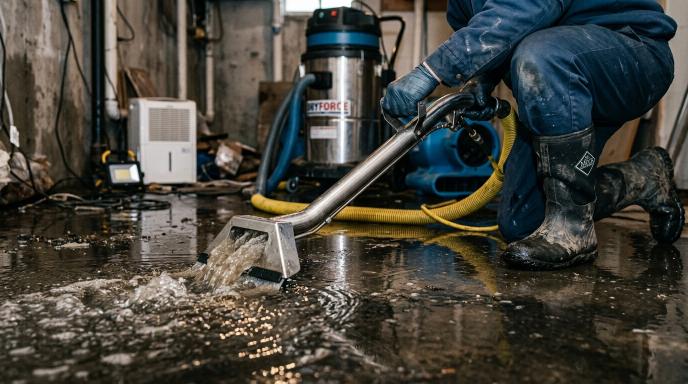
Pontiac Sewer Backup Cleanup in Seminole Hills and Older Blocks
Sewer backups are the most serious call we get from Pontiac, and Seminole Hills has been in the news for them. In 2026, residents described repeated basement flooding and sewer backups going back years, along with standing water on dry days. Miami Street was named in the reporting. Neighbors said the county and the city point at each other, and the cause had not been publicly identified.
Seminole Hills is a historic neighborhood of nearly 500 homes. The streets were laid out in the 1910s and most houses were built in the 1920s, including the Tudor Revival, Colonial Revival and Craftsman homes along Ottawa Street. Those basements are worth saving, and a floor drain in one can turn into a fountain.
Backup water is Category 3 under the IICRC S500 standard. It carries bacteria and other pathogens, so we treat it as a biohazard. Our sewage backup cleanup process covers extraction, removal of porous materials that touched the water, antimicrobial treatment and drying. Carpet, pad and the bottom of drywall almost never survive sewage contact. Concrete, block and most framing can be cleaned and dried.
What the county is doing
Oakland County bought Pontiac's wastewater system from the city in 2012, selling $58 million in bonds while Pontiac was under emergency management. In 2016 the Perry Street Diversion, a new pump station and force main, let Pontiac send sewage to its own treatment plant instead of Detroit's. As of early 2025, more than $55 million, including $18 million in grants, was going into Pontiac water and sewer upgrades, with sewer-line rehab on Martin Luther King Jr. Boulevard among the projects. Those upgrades take years, and they don't help a basement that is flooded tonight.
Filing a Pontiac Sewer Backup Claim With Oakland County
Pontiac residents file sewer backup claims with the Oakland County Water Resources Commissioner, not City Hall. The WRC operates and maintains Pontiac's sewage system, so it is the governmental agency under Michigan's PA 222 of 2001. The office is at One Public Works Drive, Building 95W, Waterford, MI 48328. The main line is 248-858-1066 and the after-hours line is 248-624-6366. The sewer notice goes to the county, but your insurance claim goes to your own carrier, so file both.
The deadline is tight. Your written notice has to reach the WRC within 45 days of discovering the damage. Include your name, address and phone number, the property address, the date you found the damage, and a short description of what happened. Don't wait for cleanup to finish before you send it.
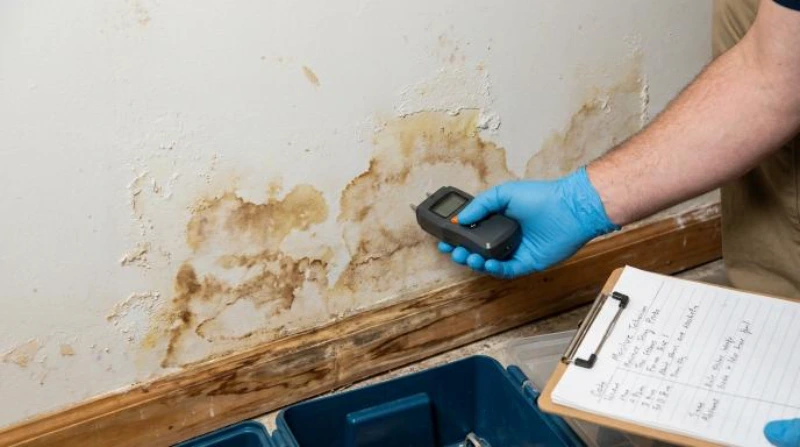
From the moment we arrive, we photograph every affected area, record moisture readings and keep a log of what we removed and why. That record works for your notice to the county and for your insurer. For coverage questions, our page on whether homeowners insurance covers basement flooding in Michigan explains why sewer backup is often a separate endorsement.
Pontiac's sewers are run by the Oakland County Water Resources Commissioner. If sewage backs up into your basement, your written PA 222 notice must reach the WRC within 45 days of discovery. Take photos before anything is thrown out.
The First Hour After a Pontiac Basement Floods
The first hour decides how much of your basement can be saved. Here is what we ask Pontiac homeowners to do while our truck is on the way:
- Shut off power to the basement at the breaker panel, but only if you can reach the panel without stepping into water.
- If the water came up through a floor drain or smells like sewage, stay out of it. Keep kids and pets upstairs.
- Take wide photos and close-ups of the water line, the drain and anything stored on the floor before moving a thing.
- Stop using sinks, toilets, showers and the washer. Every gallon you send down the drain can come right back up.
- Call us at (866) 838-7745, then note the date and time you found the water for your 45-day county notice.
How Basement Flood Cleanup in Pontiac Works
We work from a 60-minute response target for Pontiac, and the crew follows the same order every time. James Novak, our lead technician, holds IICRC WRT and ASD certifications, and every job runs to the S500 water damage standard. You get a written estimate before work begins, and the rate is the same at 2 a.m. on a Sunday as it is on a Tuesday afternoon.
Extraction
Truck-mounted and portable pumps pull out standing water, usually in 2 to 6 hours depending on depth and how much has to be carried out. We identify the water category first, because clean water, gray water from a failed sump and sewage each call for different protective gear and different decisions about what stays.
Tear-out and cleaning
Wet drywall gets cut above the water line, soaked insulation comes out, and contents are sorted into save and discard piles with photos of each. In older Pontiac homes with plaster, paneling or original wood floors, we test moisture before deciding what to remove, so you don't lose more of the original house than you have to. Old plaster and wood paneling hold moisture, so mold growth can hide inside a Pontiac wall for days.
Structural drying
Dehumidifiers and air movers run for about 3 to 5 days, and we take moisture readings daily until the structure reaches dry standard. Block and stone foundation walls hold a lot of water, so older basements sometimes need the full five days. Our Dearborn headquarters team sends the same equipment and the same reporting to every Oakland County job.
What Flooded Basement Cleanup Costs in Pontiac
Most flooded basement cleanup Pontiac MI jobs fall between $500 and $8,000, and the biggest factors are the water category and whether the space is finished. Pontiac's median owner-occupied home value is $121,700, so a sewage cleanup can be a large share of what the house is worth. That makes the written estimate and the insurance file matter even more.
These are typical ranges, not quotes:
- Clean water in a small unfinished basement: $500 to $1,500.
- Sump failure (Category 2 gray water), unfinished: $1,500 to $4,000.
- Sewage backup (Category 3), unfinished: $3,000 to $8,000.
- Finished basement with sewage: $7,000 to $18,000.
- Mold remediation, if growth has started: adds $1,500 to $5,000 or more.
- Backwater (check) valve installation: $300 to $800.
Time is the factor you control. Each extra 24 hours of standing water adds roughly $1,500 to $3,000 of scope, because water climbs further into drywall and framing, and mold can begin within 24 to 48 hours. We know of no city or county backwater valve rebate for Pontiac, so a valve is an out-of-pocket cost, but in a home that has backed up before it is often the cheapest line on this list. If a past flood left a smell behind, our mold remediation service handles testing and removal under the S520 standard.
Pontiac Neighborhoods We Serve
Our flooded basement cleanup Pontiac MI service covers all three standard ZIPs, from the historic districts near downtown to the streets around the Oakland County Government Complex. Housing age changes what we find behind the walls, so here is how it plays out in a few of the city's historic areas.
Seminole Hills
Nearly 500 homes, mostly built in the 1920s, with Tudor and Craftsman houses along Ottawa Street. Residents have reported repeated sewer backups here. We bring Category 3 gear on every call.
Indian Village
Workers' houses from the 1920s and '30s, including Sears kit homes. Small basements with original walls dry well when we get to them early.
Franklin Boulevard Historic District
About 90 Victorian-era buildings, the oldest being the Myrick-Palmer House from 1848. We remove as little original material as the moisture readings allow.
Fairgrove Avenue Historic District
Late-Victorian homes north of downtown. Old foundations here get the same daily moisture logging we use for insurance files everywhere.
Modern Housing Corporation Addition
GM worker housing started in 1919, with 261 homes. Most basements here are a century old, so we check floor drains and wall joints first.
We also cover the towns around Pontiac. Our Auburn Hills flooded basement cleanup crews work the same Clinton River corridor, and basement flood cleanup in Waterford covers the lake country next door. Along Woodward, we handle flooded basement cleanup in Bloomfield Hills. For a county-wide view of drains, claims and storms, read our Oakland County water damage restoration guide.
Keeping a Pontiac Basement Dry After Cleanup
The best prevention for an older Pontiac home depends on how the water got in. If it came through the floor drain, a backwater valve is the main fix. If it came through the walls, the answer is usually outside grading, downspout extensions and crack repair. If it came up around a sump pit, the pump or its power supply failed.
Sump failures spike in Michigan winters, when discharge lines freeze and the pump runs against a blocked pipe until it burns out. Our winter sump pump failure guide covers what to check before the cold sets in. Before the crew packs up, ask them to show you where the water came in and what they would fix first.