
Mold After Basement Flood in Michigan — The 24-Hour Risk
Worried about mold after basement flood damage? The EPA, CDC and IICRC agree it can establish within 24–48 hours — faster in a 65–80°F Michigan summer basement. Here's what that means and what professional remediation involves.
The 24 to 48 Hour Window — What the Authorities Actually Say
The EPA, CDC, and IICRC all state that mold can begin growing on wet building materials within 24 to 48 hours. This is not a range with equal probability at each end — it is a window whose timing depends on temperature, humidity, and the type of material involved. If your basement is still wet, start with flooded basement cleanup in Dearborn — fast drying is the best mold prevention.
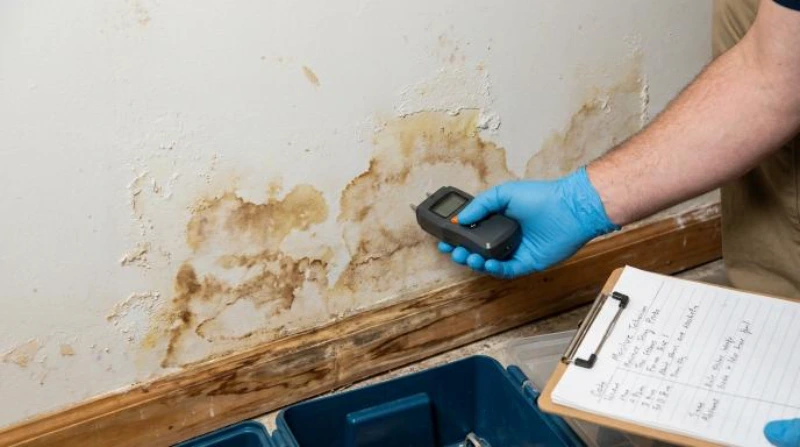
The EPA states the benchmark directly in its guidance document "A Brief Guide to Mold, Moisture and Your Home": if wet or damp materials or areas are dried 24 to 48 hours after a leak or spill happens, in most cases mold will not grow. The EPA also notes that this is a practical guideline, not an absolute threshold — mold may still occur even within 48 hours of drying, or materials left wet beyond 48 hours may not always develop mold. The point of the number is urgency, not precision.
The CDC echoes this framing: clean up and dry out flooded areas within 24 to 48 hours to reduce the chance of mold. FEMA's flood recovery guidance similarly emphasizes drying quickly after water intrusion. The IICRC S520 Standard for Professional Mold Remediation, the governing industry document, establishes this window as the remediation decision benchmark.
For Michigan homeowners with flooded basements, the practical implication is straightforward: if professional drying did not begin within 24 hours of flooding, mold prevention treatment is necessary regardless of whether mold is currently visible on surfaces.
Why Michigan Summer Flooding Creates Faster Mold Risk
Mold needs three things to grow: moisture, a food source, and a suitable temperature. Organic building materials — wood framing, drywall, carpet padding, insulation — provide the food source. Flooding provides the moisture. Temperature determines how fast the growth proceeds.
The EPA notes that most building-relevant molds grow optimally between 60 and 80 degrees Fahrenheit. Michigan basement temperatures during summer flooding events typically stay in exactly that range — 65 to 75 degrees in an unfinished basement, warmer in finished basements with less air circulation. This means summer flooding in a Dearborn basement creates conditions that push mold colonization toward the faster end of the 24 to 48 hour window.
Winter flooding in Michigan, by contrast, may push mold growth toward the slower end of the window because basement temperatures are lower. A basement flood in January that is discovered and dried quickly has less immediate mold risk than the same event in July. This does not mean winter flooding is safe to handle slowly — it means summer flooding is even more time-critical than the 24 to 48 hour benchmark alone suggests.
The Mold Growth Timeline After a Michigan Basement Flood
Hours 0 to 24
Mold spores, which are always present in the air, begin landing on wet porous materials. Under warm summer conditions, spore germination can begin within this window. No visible mold yet. The moisture the spores need is present in saturated drywall, wood framing, carpet padding, and insulation. This is the prevention window — if professional drying begins here, mold growth is preventable in most cases.
Hours 24 to 48
The EPA and CDC benchmark period. Mold colonization has begun in porous materials under warm conditions. Still not visible to the eye. The smell — the distinctive musty odor that precedes visible mold — may begin appearing near the end of this window if conditions are favorable. Professional drying that begins here requires antimicrobial treatment regardless of visible mold status, because colonization has likely begun.
Days 3 to 7
Active mold growth in wet materials. Surface mold may begin appearing at the edges of wet materials — typically where evaporation is fastest and the surface humidity is highest. Musty odor is present. Materials that are wet in this stage have active mold colonization inside them even where the surface appears clean. HEPA air scrubbing and containment are required before any affected materials are disturbed to prevent cross-contamination to the rest of the home.
Days 7 to 21
Visible surface mold is widespread. Common post-flood species in Michigan basements — Aspergillus, Penicillium, and Cladosporium — become visible on drywall paper, wood surfaces, and stored belongings. Stachybotrys chartarum (black mold) requires sustained moisture over seven or more days and appears later in this window if conditions have remained wet. By three weeks, a flooded Michigan basement that was not professionally dried has a significant mold remediation problem, not just a water damage problem.
One important distinction: Mold visible on the surface of a material is the late indicator. The growth started inside the material, in the dark, before it was visible from the outside. When you see mold on the face of a piece of drywall, the material has been colonized from inside for days. Surface treatment with bleach or commercial spray does not reach the growth inside the material. That material needs to come out.
What Materials Mold Fastest After a Dearborn Basement Flood
Mold colonizes organic porous materials fastest. In a typical Dearborn basement flooding event, the highest-risk materials are:
Drywall (gypsum board) — The paper facing of drywall is an excellent mold food source. Saturated drywall held horizontally against a flooded floor wicks moisture upward through the paper facing via capillary action. In a Dearborn CSO event involving sewage water, the lower 12 to 24 inches of all drywall in the affected area must be removed regardless of visible mold — because the Category 3 contamination cannot be adequately cleaned from drywall substrate.
Wood framing — Floor joists, bottom plates of walls, and wood subfloor all absorb moisture deeply. Mold on framing lumber is problematic because it is structural — you cannot simply remove framing the way you remove drywall. Treatment options include sanding, antimicrobial application, and drying, but the effectiveness depends on how long the wood was wet and how deep the mold has penetrated.
Carpet and carpet padding — Carpet padding is dense, organic, and moisture-retaining. It is an ideal mold growth medium and must be removed after any flooding. Carpet itself can sometimes be saved if flooding was clean water and professional extraction began within 24 hours. After sewage backup or prolonged clean water saturation, both must go.
Fiberglass insulation — Fiberglass itself does not mold, but the paper facing on faced insulation batts does. And wet fiberglass provides a wicking matrix that holds moisture against whatever materials it touches, accelerating mold colonization in adjacent wood and drywall. Wet insulation must come out.
The IICRC S520 Standard — What Professional Mold Remediation Involves
The IICRC S520 Standard for Professional Mold Remediation is the governing document for mold cleanup in the water damage restoration industry. Insurance adjusters recognize it and require remediation to follow its protocol for covered claims. Here is what an S520-compliant remediation in a Michigan basement involves:
Containment. Before any affected materials are disturbed, containment barriers are erected to isolate the mold-affected area from the rest of the building. Negative air pressure is maintained inside the containment zone — air flows inward, not outward — to prevent airborne spores from spreading to unaffected areas or upper floors. This is not optional. Disturbing mold-colonized materials without containment spreads spores throughout the building.
Personal protective equipment. Technicians in the work area wear N95 or higher respirators, disposable Tyvek suits, nitrile gloves, and eye protection. The EPA confirms that airborne mold spores and mycotoxins from disturbed colonized materials create respiratory exposure risk, particularly for people with existing health conditions.
Physical removal of affected porous materials. Colonized drywall, carpet, padding, and insulation are physically removed rather than treated in place. The IICRC S520 is explicit on this point: porous materials with active mold growth cannot be adequately cleaned and must be removed. Treatment alone leaves mold inside the material's substrate where cleaning agents cannot reach.
HEPA air scrubbing. High-efficiency particulate air (HEPA) filtration units run continuously during remediation, capturing airborne spores. HEPA filters capture particles at the 0.3 micron size — most mold spores are 3 to 40 microns in diameter, well within HEPA capture range.
Antimicrobial treatment. After physical removal and HEPA scrubbing, EPA-registered antimicrobial products are applied to all remaining surfaces in the affected area. This addresses surface mold that HEPA scrubbing captures and residual contamination on non-porous surfaces.
Post-remediation verification. Air samples are taken inside the containment area and compared to outdoor baseline samples. Acceptable clearance means mold counts inside the remediated area are not significantly higher than outdoor counts. If clearance fails, remediation continues until it passes. Containment does not come down until clearance is confirmed.
Mold After Flooding and Michigan Homeowners Insurance
Whether mold remediation is covered by your homeowners insurance depends on the original cause of the water damage and your specific policy. In general, mold that results from a covered water damage event — burst pipe flooding that is itself covered — is typically covered as an extension of that claim. Mold that results from a flooding event that was not covered — sewer backup without a sewer backup rider, groundwater seepage — is also typically not covered.
Mold resulting from delayed action — flooding that was not addressed promptly, allowing mold to establish — may be denied even under otherwise-covered water damage claims. Insurance policies typically exclude mold resulting from the homeowner's failure to act reasonably to prevent further damage after a covered loss. This is one more reason why fast professional response to any flooding event is not just good practice — it directly affects what your insurance claim can recover.
Call us for a free damage assessment if your basement has flooded. We document everything from the moment we arrive — before, during, and after — and our drying logs provide evidence that you acted promptly, which supports your claim.
Why Wayne County Homeowners Call Us — Not a 1-800 Franchise
✓ Dryout Michigan
- Real person answers — no hold queue
- 60-minute response, Wayne County
- IICRC S500/S520 certified protocol
- Written estimate before work begins
- Insurance documentation from arrival
- No upselling of unnecessary demo
✗ Common complaints about franchise companies
- Callback promised, never comes
- Multiple visits to bring equipment
- Slow — working multiple projects
- Over-demolition to maximize insurance
- Communication gaps during drying
- Family moved to hotel for weeks
Mold After Basement Flood Michigan — Frequently Asked Questions
How fast does mold grow after a basement flood in Michigan?
The EPA, CDC, and IICRC all confirm mold can begin growing on wet building materials within 24 to 48 hours. In Michigan during summer months, when basement temperatures typically stay between 65 and 80 degrees Fahrenheit, the EPA notes mold grows optimally in that exact temperature range, pushing colonization toward the faster end of the 24 to 48 hour window. The 24 to 48 hour benchmark is the urgency signal — professional drying begun within this window prevents mold in most cases.
How do I know if I have mold after a basement flood?
The musty smell appears before mold is visible. Visible mold — discoloration, spots, or fuzz on surfaces — is the late indicator; growth started inside materials before it reached the surface. If more than 24 to 48 hours passed between flooding and the start of professional drying, mold should be assumed present in wet materials even before it is visible. A professional moisture assessment confirms whether materials have retained hidden moisture.
Is the mold in my Michigan basement dangerous?
Mold exposure causes respiratory irritation, allergic reactions, and in people with asthma or existing respiratory conditions, significant health effects. Most post-flood mold growth in Michigan basements in the first weeks involves Aspergillus, Penicillium, and Cladosporium species, which cause irritation and allergic responses. Stachybotrys (black mold) requires sustained moisture over seven or more days and appears later. Any visible or suspected mold in an enclosed basement after flooding warrants professional assessment.
What is the IICRC S520 standard for mold remediation?
The IICRC S520 Standard for Professional Mold Remediation is the governing industry document for mold cleanup. Key elements include containment barriers with negative air pressure, HEPA air filtration, physical removal of colonized porous materials, antimicrobial application, and post-remediation clearance testing before containment is removed. Insurance adjusters recognize the S520 as the benchmark for covered mold remediation claims.
Can I clean up mold myself after a flood in my Michigan basement?
The EPA recommends professional remediation for mold covering more than 10 square feet. For any mold resulting from sewage backup, professional remediation is required regardless of size because of pathogen contamination beyond mold. Post-flood mold in Michigan basements typically exceeds 10 square feet. DIY treatment with bleach does not reach mold inside materials and does not address the moisture source feeding continued growth.
What does mold remediation after a basement flood in Michigan cost?
Professional mold remediation in a Michigan basement typically runs $1,500 to $5,000 for a contained area in an unfinished basement. A finished basement requiring drywall and flooring removal can run $3,000 to $10,000 or more. Water damage restoration industry data shows that mold remediation adds $1,223 to $3,753 on top of water damage costs when not caught early — making fast professional response significantly less expensive than delayed remediation.
How long does mold remediation take after a flood?
A standard Michigan basement mold remediation takes two to five days from containment to clearance. Day one: containment setup, material removal. Days two and three: HEPA scrubbing, antimicrobial application, structural drying continuation. Day four: clearance air samples taken. Day five: results and containment removal if clearance passes. More extensive colonization or larger affected areas take longer.
Mold Prevention Starts With Fast Water Removal
The only effective mold prevention after a basement flood is fast, thorough water removal followed by certified structural drying. There is no product you spray on materials that substitutes for getting moisture out of them within the 24 to 48 hour window. Fans and household dehumidifiers move surface air but do not extract moisture from inside concrete, wood framing, or drywall substrate — the places where mold grows before it is visible.
U.S. EPA — A Brief Guide to Mold, Moisture and Your Home (24-48 hour drying benchmark)
CDC — Mold Basic Facts (drying guidance after flooding)
FloodRepair.org — Mold Growth After Water Damage: EPA, CDC, and OSHA sources on the 24-48 hour window
FloodRepair.org — IICRC S520 Mold After Water Damage Standards
Mold Remediation Authority — EPA notes mold grows optimally between 60-80°F (summer flooding conditions)
Complete Dryout Michigan Resource Library
IICRC Water Damage Restoration Technician (WRT) #WRT-48291
IICRC Applied Structural Drying Technician (ASD) #ASD-32817
Licensed Contractor · Serving Dearborn MI since 2019
Mold timing and remediation steps follow IICRC S520, EPA and CDC guidance. Last reviewed: October 2026.
Head Office
No extra charge for nights or weekends
+ Dearborn Heights · Allen Park · Lincoln Park · Wayne County
Serving all of Dearborn, Wayne County, and surrounding communities 24/7
Flooded Basement Cleanup — All Wayne County Cities
Flooded Basement in Michigan?
The 24 to 48 hour mold window starts immediately. We respond 24/7 across Dearborn and surrounding Wayne County communities. Real person answers. Crew dispatched immediately.
📞 (866) 838-7745 — Call 24/7