
Flooded Basement Cleanup Belleville MI
Belleville Lake Is Beautiful Until It Rises After a Storm — Then It Backs Up Into Your Basement.
Basement flooding after heavy rain? When the Huron River rises, Belleville Lake rises with it and pushes pressure into the combined sewer and up your floor drain. Flooded basement cleanup Belleville MI crews respond 24/7.
Why Belleville Basements Flood — Belleville Lake + Huron River Watershed
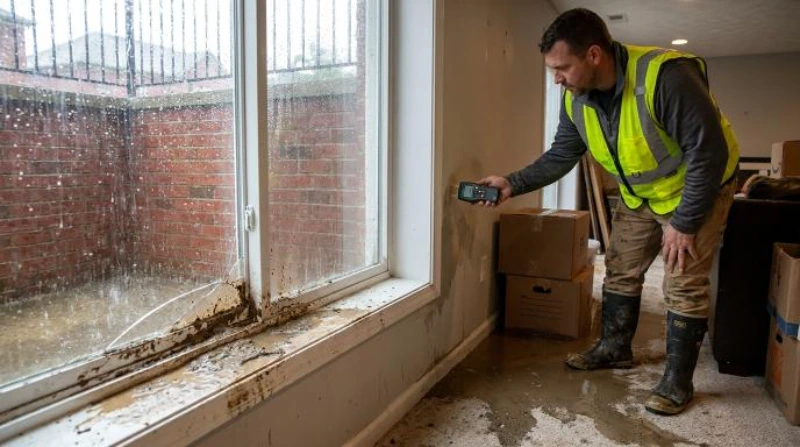
Belleville's housing is more varied in age than most Wayne County communities, reflecting its gradual growth as a small lakeside community rather than the mass-development patterns of the 1960s and 1970s Downriver cities. Older lakeside homes from the 1940s and 1950s sit alongside 1970s and 1980s construction further from the water, with some 1990s and 2000s development in the newer residential areas. Belleville calls are handled by the same team behind our flooded basement cleanup in Dearborn.
When Belleville Lake is up and your floor drain starts pushing water, treat it as Category 3 sewage until it's tested. Stay out of the basement, leave the fans off and switch off the basement breaker at the main panel. Then call — we test the water category before any work starts.
Emergency Flood Cleanup in Belleville MI
We cover all Belleville 48111 addresses 24 hours a day. Belleville's lake-driven flooding follows Huron River watershed dynamics — events can build over hours to days during extended rain patterns, which is different from the rapid-onset CSO events typical of most Downriver Wayne County cities. But when the lake rises, the flooding is real.
See our full 24/7 emergency response protocol →
Sewage Backup Cleanup in Belleville MI
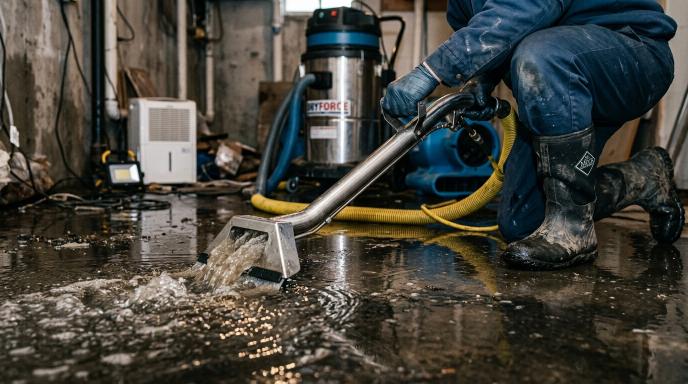
Belleville's combined sewer connects to the Belleville Lake drainage system. When the lake rises and pressurizes the sewer, Category 3 sewage reverses through floor drains throughout the connected residential network. IICRC S500 Category 3 protocol applies. We carry full protocol on every truck dispatched to Belleville.
Full Category 3 sewage backup protocol →
Basement Water Removal in Belleville MI
Belleville's varied housing eras mean extraction and drying approaches vary by address. 1940s and 1950s lakefront homes may have older block or even stone foundations requiring extended drying windows. 1970s and 1980s construction dries in standard 3-to-5-day timeframes. We assess foundation type on arrival.
Our complete water removal process →
Structural Drying in Belleville MI
1940s lakefront homes: 5 to 7 days drying. 1970s-1980s concrete block: 3 to 5 days. Belleville Lake proximity creates an elevated humidity baseline similar to any lake-adjacent community — ambient basement humidity runs above inland averages year-round. Daily pin meter readings provided in writing.
How IICRC S500 structural drying works →
Mold Remediation in Belleville MI
Belleville Lake creates an elevated humidity baseline year-round in lakeside and near-lake properties. Post-flood mold risk is above the Wayne County inland average due to this higher starting humidity point. The 24-to-48-hour mold establishment window documented by EPA and CDC research applies at the shorter end during Belleville's summer lake-humidity conditions.
Full IICRC S520 mold remediation protocol →
Belleville Neighborhoods We Serve
West Belleville — Belleville Lake Shoreline
The western Belleville lakefront is the most flood-prone zone in the city. Properties here sit closest to Belleville Lake's high-water mark. During Huron River flood-stage events — which NOAA data documents occurring multiple times per decade at significant magnitude — the lake level rises and water moves onto lakefront properties and into basement drains through hydraulic pressure on the sewer connections.
Central Belleville — Main Street Corridor
Central Belleville's Main Street corridor includes the city's small commercial district and adjacent residential streets. Some of these properties sit on combined sewer connections that run toward Belleville Lake — meaning lake-level rises propagate CSO pressure into this zone through the underground network. Properties here may flood from lake-level events even without receiving direct surface flooding.
East Belleville — Belleville Road District
East Belleville along Belleville Road is the most inland section of the city and the furthest from the lake's direct flooding influence. Later 1970s and 1980s construction here has marginally newer infrastructure. Flood risk is lower but not zero during major Huron River watershed events.
North Belleville — Huron River Channel
North Belleville sits along the Huron River channel above the lake. When the river rises upstream of the lake, water flow into the lake increases, pushing the lake level up. North Belleville can observe the incoming river flooding before the lake level has fully responded — giving slightly more warning than the lakefront zones.
What Does Flooded Basement Cleanup Cost in Belleville?
$1,200 to $3,500 clean water. $2,200 to $5,500 gray water. $3,000 to $9,000 Category 3 sewage unfinished. Lakefront homes may have higher costs from more complex water entry points and occasional concurrent lake-water and sewer-backflow events.
Why Wayne County Homeowners Call Us — Not a 1-800 Franchise
✓ Dryout Michigan
- Real person answers — no hold queue
- 60-minute response, Wayne County
- IICRC S500/S520 certified protocol
- Written estimate before work begins
- Insurance documentation from arrival
- No upselling of unnecessary demo
✗ Common complaints about franchise companies
- Callback promised, never comes
- Multiple visits to bring equipment
- Slow — working multiple projects
- Over-demolition to maximize insurance
- Communication gaps during drying
- Family moved to hotel for weeks