
Sump Pump Failure Cleanup Dearborn MI — 24/7 Response
Sump pump failed during the storm? The power goes out, the pump stops and water rises while you sleep. Our sump pump failure cleanup Dearborn MI crews respond 24/7 with industrial pumps and drying gear — and find out why it failed.
Real person answers. We arrive within 60 minutes anywhere in Dearborn.
Why Sump Pump Failures Happen During Dearborn Storms
Sump pump failure floods are not random. In Dearborn, they follow a predictable pattern tied directly to the city's weather and infrastructure. Understanding why they happen is the first step to knowing what the cleanup involves and what it will cost. A failed sump pump is one of the most common reasons homeowners call us for flooded basement cleanup in Dearborn. Winter brings its own failure points — frozen discharge lines and ice-storm outages — covered in our sump pump failure Michigan winter guide.
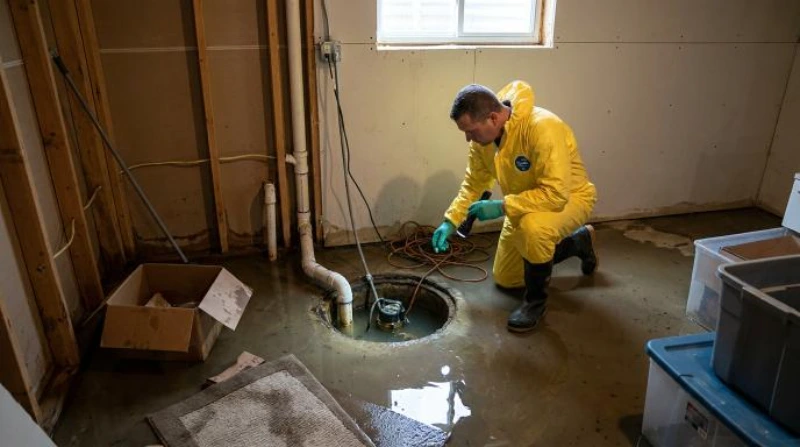
Power Outage — The Most Common Cause in Dearborn
The same severe thunderstorms that overwhelm Dearborn's combined sewer system and push sewage into basements also knock out electrical power across the city. Your sump pump stops the moment the lights go out. The pit fills. Water rises. By the time power returns, the damage is done.
This is not a pump failure in the mechanical sense. The pump itself may be perfectly functional. But without power, a sump pump is just a motor sitting in a pit watching water rise around it. Battery backup systems exist specifically for this scenario. The city of Dearborn's flood preparedness page at dearborn.gov recommends sump pump installation for flood-prone properties and notes that check valves should be installed to prevent backflow — both of which become more important when power outage risk is high.
Frozen Discharge Line — The Most Common Winter Cause
Michigan winters regularly produce freeze-thaw cycles that ice over the exterior portion of the sump pump discharge line. When the pump runs but cannot push water through a frozen line, one of two things happens: the motor burns out within hours from the strain, or the water backs up into the pit and overflows into the basement.
Frozen discharge lines are most common in January and February in Dearborn, when overnight temperatures regularly drop below 20 degrees Fahrenheit. If your pump ran during a cold snap and the basement flooded, a frozen line may be the actual cause even if the pump itself is still running. We assess the full system before recommending any repair or replacement.
Float Switch Failure
The float switch is the trigger mechanism that tells the pump to turn on when water in the pit rises above a set level. Float switches get stuck in the up position — telling the pump it does not need to run when the pit is actually full. Debris from combined sewer overflow events, sediment buildup, and simple mechanical wear over years of cycling can all jam a float switch. It is one of the least expensive repairs in sump pump maintenance and one of the most overlooked.
Overwhelmed Pump During Extreme Events
Standard residential sump pumps are rated for specific gallons per hour. During events like the June 2021 storm — which FEMA classified as a 1,000-year rainfall event — the volume of groundwater entering Dearborn basement pits exceeded what any residential pump could move. When the pit fills faster than the pump can drain it, the water overflows regardless of whether the pump is running perfectly.
Dearborn's clay-heavy soil holds water at the surface and feeds it into foundation drainage slowly but continuously during and after heavy storms. A sump pit that filled during a storm may continue filling for 24 to 48 hours after the rain stops, even if the pump is operational, until the surrounding soil drains to a normal level.
What Makes Sump Pump Failure Water Different From Other Flooding
Sump pump failure flooding is Category 2 water under the IICRC S500 standard — gray water. It is not raw sewage, but it is not clean water either. Groundwater that enters through basement floor drains and foundation seepage carries soil bacteria, dissolved minerals, pesticides, mold spores, and whatever contaminants exist in the surrounding soil.
The distinction matters for cleanup protocol. Category 2 water requires extraction, structural drying, and antimicrobial treatment — the same as Category 3, minus the full decontamination step. All porous materials that sustained prolonged contact should be assessed for removal. Carpet, carpet padding, and the lower sections of drywall in a finished basement typically require removal in extended flooding events.
The EPA states that mold begins growing inside wet building materials within 24 to 48 hours. Many Dearborn sump pump failures happen while the homeowner is asleep or away from home. A pump that failed at midnight during a power outage may not be discovered until 6 AM — already six hours into the mold window. If the failure was not discovered immediately, antimicrobial treatment is not optional. It is essential even before mold is visible.
What We Do When We Arrive
We Assess the Failure Cause First
Before any water comes out, we identify why the pump failed. Power outage, frozen discharge line, float switch, burned motor — each has a different implication for what happens next. If the pump is operational again but the discharge line is frozen, running it again will burn out the motor. We assess before we advise on repair or replacement.
Water Extraction — Category 2 Protocol
Industrial submersible pumps remove standing water. Commercial extraction equipment removes the moisture embedded in concrete floors, subfloor joists, and the lower sections of walls. We work through the Category 2 protocol: extraction first, then a material assessment for removal decisions, then drying setup.
Structural Drying — Three to Five Days
LGR dehumidifiers and industrial air movers are positioned for continuous operation. Daily pin meter readings are taken and logged. Equipment stays until every measurement meets IICRC S500 certified dry standards. In an unfinished Dearborn basement, three to five days is typical. Finished basements with drywall and flooring take longer, and any materials that require removal add time before drying can begin.
Antimicrobial Treatment
Every surface in the affected area receives EPA-registered antimicrobial treatment after drying. For Category 2 water events, this step addresses bacterial contamination from groundwater contact and prevents mold from establishing in materials that were wet but not removed.
Insurance Documentation
Photos taken on arrival before any work begins, daily moisture logs, failure cause assessment, scope of work, and final clearance document. All formatted for your insurance adjuster. Sump pump failure flooding typically requires a separate endorsement rather than the standard homeowners policy — but documentation is essential regardless, to maximize whatever coverage applies.
Sump Pump Failure Insurance — What Dearborn Homeowners Need to Know
Standard homeowners insurance in Michigan does not cover sump pump failure flooding. This surprises most homeowners the first time they file a claim. The standard policy covers sudden and accidental damage from internal plumbing failures — a burst pipe, a water heater rupture. Sump pump failure is classified differently: it is an equipment failure, and standard policies exclude it unless you have a specific endorsement.
Two endorsements to ask your insurer about before the next storm season. A sump pump failure rider covers the cleanup cost when your pump fails and the basement floods. A water backup endorsement is broader and covers backup from sewers and drains as well as sump pump failure. Either adds $5 to $15 per month to your premium. Given that Dearborn storm events regularly knock out power and overwhelm sump systems city-wide, both endorsements are worth having.
Call your insurer and ask specifically: Do I have sump pump failure coverage? Do I have water backup coverage? Do not assume the answer is yes.
Battery Backup Sump Pumps — What Dearborn Homeowners Should Consider
The city of Dearborn's flood preparedness page at dearborn.gov specifically recommends sump pump installation for flood-prone properties and advises that check valves be professionally installed to prevent backflow. A battery backup system addresses the power outage scenario that causes most Dearborn sump pump flood events.
A battery backup sump pump runs from a charged battery when the main power is out. Combination systems include both a primary electric pump and a battery backup in one unit, ensuring continuous operation through a storm. Water-powered backup systems use city water pressure to power a secondary pump when electricity is unavailable, though they consume water in the process.
Annual maintenance that reduces sump pump failure risk: pour a bucket of water into the pit and watch the cycle run. Check that the discharge line has no visible ice buildup before winter storms. Clear debris from around the float switch after any combined sewer overflow event. Know your pump's age — according to industry data, sump pumps over seven years old fail at a significantly higher rate than newer units, particularly under the high-cycle conditions Dearborn storms create.
Sump Pump Failure Cleanup Cost in Dearborn, MI
| Scenario | Typical Range |
|---|---|
| Small area, discovered quickly, unfinished basement | $800 to $2,000 |
| Standard Dearborn basement, full extraction and drying | $2,000 to $4,500 |
| Water sat 12 or more hours before discovery | $3,000 to $6,000 |
| Finished basement requiring drywall and flooring removal | $4,000 to $9,000+ |
The single variable that most increases cost is time — how long the water sat before someone called us. A sump pump that failed at midnight during a storm and was discovered at 6 AM is a much smaller job than one that failed Friday afternoon and was not found until Sunday morning. Call as soon as you discover the problem.
Why Wayne County Homeowners Call Us — Not a 1-800 Franchise
✓ Dryout Michigan
- Real person answers — no hold queue
- 60-minute response, Wayne County
- IICRC S500/S520 certified protocol
- Written estimate before work begins
- Insurance documentation from arrival
- No upselling of unnecessary demo
✗ Common complaints about franchise companies
- Callback promised, never comes
- Multiple visits to bring equipment
- Slow — working multiple projects
- Over-demolition to maximize insurance
- Communication gaps during drying
- Family moved to hotel for weeks
Sump Pump Failure Cleanup Dearborn MI — Frequently Asked Questions
What do I do if my sump pump fails and my Dearborn basement floods?
Turn off the basement breaker at the main panel if water is near electrical outlets. Do not restart the pump until the failure cause is identified — running a pump against a frozen discharge line burns out the motor. Call us immediately. We respond 24/7 and arrive within 60 minutes across Dearborn. We assess the failure cause, extract the water, dry the structure, and document everything for your insurance claim.
Is sump pump failure flooding covered by homeowners insurance in Michigan?
Standard homeowners insurance typically does not cover sump pump failure flooding. You need a sump pump failure rider or water backup endorsement added separately. Call your insurer and ask specifically whether you have this coverage. Adding both a sump pump rider and a water backup endorsement typically costs $5 to $15 per month. We document all damage thoroughly to support whatever claim applies to your situation.
Why do sump pumps fail during Dearborn storms?
The most common cause is power outage. The same severe storms that overwhelm Dearborn's combined sewer system also knock out electrical power, stopping sump pumps at the worst possible moment. Frozen discharge lines are the second most common cause in winter months. Float switch failure and mechanical wear account for most other cases. Power loss accounts for the majority of Dearborn sump pump flood events during severe weather.
How long does cleanup take after a sump pump failure flood in Dearborn?
Water extraction takes two to six hours. Structural drying takes three to five days with continuous equipment under IICRC S500 standards. If the water sat more than 24 hours before discovery, additional time is needed for antimicrobial treatment and material assessment. Every drying session is documented: pin meter readings logged at marked test points each day and handed to you in writing. Equipment is pulled only when every reading hits the IICRC S500 certified dry threshold — not when the surface looks or feels dry.
Can a sump pump failure cause mold in my Dearborn basement?
Yes. Sump pump failure water is Category 2 gray water carrying soil bacteria and mold spores. The EPA and CDC confirm mold can begin growing within 24 to 48 hours on wet building materials. Many Dearborn sump pump failures are discovered hours after they happen. If more than 24 hours passed before discovery, antimicrobial treatment is necessary even before mold is visible on surfaces.
What is gray water and is it dangerous?
Gray water is Category 2 under the IICRC S500 standard — contaminated but not raw sewage. Sump pump failure groundwater carries soil bacteria, pesticides, mold spores, and dissolved contaminants. It is less dangerous than Category 3 sewage backup but requires professional cleanup with gloves, boots, extraction equipment, and antimicrobial treatment. Do not let children or pets contact Category 2 water.
What is a battery backup sump pump and does my Dearborn home need one?
A battery backup keeps your sump pump running when power goes out — the exact moment you need it most during a Dearborn storm. Given Wayne County's frequency of severe storms and power outages, battery backup is a sound investment for any Dearborn home with a basement. The city of Dearborn's flood preparedness page recommends sump pump installation for flood-prone properties. Most homeowners add backup systems after their first sump pump failure flood.
How do I prevent sump pump failure flooding in my Dearborn basement?
Test your pump quarterly by pouring water into the pit. Install a battery backup or combination system. Check discharge lines for ice buildup each winter before storm season. Clear float switches of debris after storms. Know your pump's age — units over seven years old fail significantly more often. Call us if the pump sounds unusual or cycles more frequently than normal during heavy rain.
What category of water is a sump pump failure?
Sump pump failure typically produces Category 2 (gray water) under IICRC S500 — groundwater that has absorbed soil contaminants but does not contain raw sewage. However, if your floor drain also backed up during the same storm event — common in Dearborn's combined sewer zone — you have Category 3 sewage water in addition to the sump failure. We assess the actual water source on arrival and classify correctly before beginning work.
Can a sump pump failure cause mold?
Yes — sump pump failure water is Category 2, meaning it contains biological and chemical contaminants that support rapid mold growth. Groundwater carries soil bacteria and organic matter. In Wayne County's clay-heavy soils, groundwater is particularly high in organic content. The EPA's 24–48 hour mold growth window applies. Sump pump failure water that reaches drywall or insulation requires professional drying, not just pumping out.
Why do sump pumps fail during Dearborn storms?
Three common causes: (1) Power outage — Wayne County storms often kill power to the pump during the exact storm event it's needed most. A battery backup or generator-connected sump is essential. (2) Float switch failure — the switch that activates the pump can jam or fail, leaving water rising with the pump inactive. (3) Overwhelm — during extreme CSO events, groundwater infiltration exceeds even a functioning pump's capacity. Some Dearborn basements need two pumps to handle peak inflow during major storms.
What is the fastest way to remove water from a flooded basement?
Professional truck-mounted extraction removes water far faster than any consumer pump or wet-dry vacuum. Our equipment removes thousands of gallons per hour. For standing water above ankle depth, do not use electrical appliances — shut the main breaker first. Call us and we dispatch immediately. Every hour of contact increases structural damage and mold risk exponentially.
Sump Pump Failure Resources — Dearborn MI
Complete Dryout Michigan Resource Library
IICRC Water Damage Restoration Technician (WRT) #WRT-48291
IICRC Applied Structural Drying Technician (ASD) #ASD-32817
Licensed Contractor · Serving Dearborn MI since 2019
Written from our sump pump failure calls across Dearborn, using IICRC S500 water categories. Last reviewed: October 2026.
Head Office
No extra charge for nights or weekends
+ Dearborn Heights · Allen Park · Lincoln Park · Wayne County
Serving all of Dearborn, Wayne County, and surrounding communities 24/7
Flooded Basement Cleanup — All Wayne County Cities
Sump Pump Failed in Dearborn, MI?
We identify the failure cause, extract the water, dry the structure, and document everything for your insurance claim. 24/7 across all Dearborn ZIP codes. Real person answers every call.
📞 (866) 838-7745 — Call 24/7