
Flooded Basement Cleanup Springwells Dearborn MI — 24/7
Basement flooding? Springwells is Dearborn's oldest neighborhood and highest-risk zone — early-1900s drainage and the Rouge River. Our flooded basement cleanup Springwells Dearborn MI crews respond 24/7 to every street.
Serving Springwells, Dearborn — ZIP 48126. Call early in a storm.
Springwells — Dearborn's Oldest Neighborhood and Its Highest Flood Risk
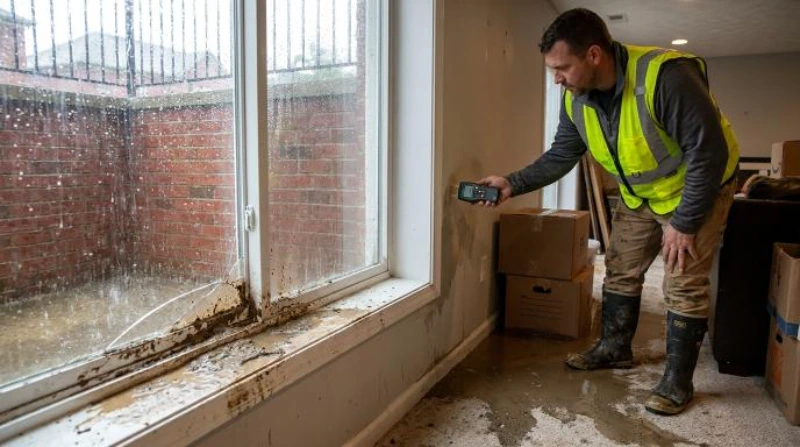
Springwells was first settled in 1826 — nearly 200 years ago. The Springwells Park Historic District, listed on the National Register of Historic Places in 2015, is bounded by Rotunda Drive, the Michigan Central Railroad line, and Greenfield and Eastham Roads. It contains more than 100 buildings of historical significance. It also contains some of the oldest drainage infrastructure in Dearborn, and it sits directly on the Rouge River. That makes Springwells the highest-risk part of our Dearborn basement flood cleanup service area.
That combination — river proximity plus aged drainage plus the downstream position Dearborn holds in the Rouge watershed — makes Springwells the neighborhood we respond to most frequently for severe basement flooding events. When a storm pushes the Lower Rouge above flood stage, Springwells basements feel it from outside, through the foundation. When the combined sewer system overflows, they feel it from below, through the floor drain. A bad enough storm produces both simultaneously.
NOAA Rouge River Gauge — What the Numbers Mean for Springwells:
12.4 feet — Property damage begins; some roads close.
13.6 feet — Brady Street in Dearborn floods; many bridges become impassable.
14.4 feet — Wayne Park submerges; considerable damage in residential areas.
Monitor the gauge at water.noaa.gov/gauges/dlrm4 during major storms.
The Three Flooding Problems Unique to Springwells
Most Dearborn neighborhoods deal with one or two flooding mechanisms. Springwells regularly deals with three at once.
Combined sewer overflow from below. Dearborn's combined sewer system handles 3.5 inches of rain per day. When storms exceed that, the pressure reverses in the sewer mains and pushes raw sewage up through basement floor drains throughout the city. Springwells, being in the downstream zone of the city's drainage system, sees this as reliably as any neighborhood in Dearborn.
Rouge River groundwater pressure from outside. As the Rouge River rises above its normal channel level, it saturates the soil on either bank. That saturated soil creates hydrostatic pressure against the foundations of homes in the immediate vicinity. Even before water overflows the river banks, the rising water table is pressing against foundation walls and looking for every crack, joint, and imperfection in aging concrete block construction.
Aged clay tile drainage infrastructure. Springwells homes dating to the early 1900s have drain tile systems installed at the same time as the original construction. Clay tile segments crack, separate, and develop root intrusion over a century of Michigan freeze-thaw cycles. When those tiles fail, groundwater enters the basement through the foundation's lowest perimeter rather than through the designed drainage path. This means some Springwells basements receive water through the floor drain, through the cove joint, through foundation cracks, and through failed drain tile all in the same event.
The Springwells Water Works Park and the River Corridor
Springwells Water Works Park sits along the Rouge River and marks the heart of this neighborhood's geographic identity. The park and the historic buildings along the river corridor are regular reminders of how close Springwells sits to an active flood risk. University of Michigan-Dearborn geology professor Jacob Napieralski has noted that when you remove a river from the landscape, the topography stays — meaning that even buried and redirected waterways still influence where water flows and accumulates. In Springwells, the river has not been removed. It runs directly through the neighborhood's eastern boundary.
What This Means for Cleanup
Springwells flooding is almost always a compound event. That means cleanup requires assessment of multiple water sources before any protocol is determined. Is the water from a CSO event (Category 3), from river-adjacent groundwater seepage (likely Category 2), or from a combination? The answer changes the decontamination requirements, the material removal decisions, and the insurance documentation approach.
We arrive in Springwells with the full range of equipment and assess before doing anything else. Homeowners in this neighborhood who have flooded repeatedly know that cutting corners on cleanup — or missing the secondary moisture source that the visible flood hides — leads to mold problems, structural problems, and repeat flooding that costs more to fix each time it happens.
Our Flooded Basement Cleanup Services in Springwells
Every service available to Dearborn residents is available 24/7 to Springwells homeowners:
Emergency water removal — Industrial pumps and commercial extraction equipment. We identify all water sources before extraction begins.
Sewage backup cleanup (Category 3) — Full decontamination protocol required when CSO is the source. Hospital-grade disinfection, porous material removal, HEPA air scrubbing, and clearance testing.
Groundwater and storm water cleanup (Category 1 and 2) — Extraction, structural drying, and antimicrobial treatment for non-sewage flooding events.
Structural drying — Three to seven days depending on water category. Daily moisture readings logged for insurance documentation.
Foundation crack assessment — We note all observed foundation damage during our assessment and include it in the written documentation for your insurance adjuster. We do not perform foundation repair but document the damage for your records.
Mold remediation — IICRC S520 protocol when mold is present or when flooding preceded professional drying by more than 24 hours.
Why Wayne County Homeowners Call Us — Not a 1-800 Franchise
✓ Dryout Michigan
- Real person answers — no hold queue
- 60-minute response, Wayne County
- IICRC S500/S520 certified protocol
- Written estimate before work begins
- Insurance documentation from arrival
- No upselling of unnecessary demo
✗ Common complaints about franchise companies
- Callback promised, never comes
- Multiple visits to bring equipment
- Slow — working multiple projects
- Over-demolition to maximize insurance
- Communication gaps during drying
- Family moved to hotel for weeks
Springwells Flooded Basement — Frequently Asked Questions
Is Springwells the highest flood risk neighborhood in Dearborn?
Yes. Springwells carries the highest basement flood risk in Dearborn because of two simultaneous factors: direct Rouge River proximity and the oldest drainage infrastructure in the city. NOAA gauge data shows Brady Street floods when the Lower Rouge exceeds 13.6 feet. Springwells basements receive water pressure from two directions during severe storms — CSO backup from below and groundwater pressure from river-saturated soil from outside.
How quickly can you respond to a flooded basement in Springwells?
We aim to arrive within 60 minutes anywhere in Springwells, including all streets within the historic district bounded by Rotunda Drive, the Michigan Central Railroad line, and Greenfield and Eastham Roads. ZIP 48126 is our primary response zone. Every call is answered by a live dispatcher. We respond immediately.
What flooding problems are specific to Springwells homes?
Springwells homes face three specific problems not found together in any other Dearborn neighborhood: Rouge River groundwater pressure from outside the foundation, combined sewer overflow pushing through the floor drain from below, and original clay tile drain systems from the early 1900s that have cracked and shifted over decades. Some Springwells homes receive water from all three sources simultaneously during severe storms.
When should I call you before a storm hits Springwells?
Call if NOAA issues a Flash Flood Watch for Wayne County, or if the Lower Rouge gauge at Dearborn approaches 12.4 feet — the level at which property damage begins according to NOAA flood stage data. Monitor the gauge at water.noaa.gov/gauges/dlrm4 during major storms. Calling early means we can prioritize Springwells before call volume peaks city-wide during a major event.
How is flooding in Springwells different from other Dearborn neighborhoods?
Springwells receives pressure from directions most other Dearborn neighborhoods do not experience. The Rouge River creates groundwater pressure against foundations that rises and falls with the river level, independent of what the sewer system is doing. During a major storm, a Springwells basement can receive CSO backup through the floor drain while groundwater simultaneously presses through foundation cracks due to a river level well above normal. No other Dearborn neighborhood routinely deals with this compound pressure.
How fast does mold grow after basement flooding in Springwells?
In Springwells' older homes — many built 1920s–1940s with limited airflow in basements — the EPA-documented 24–48 hour mold window is even tighter. Dense rubble-stone and brick foundations retain moisture and create ideal conditions for rapid mold colonization. Do not let 'it smells fine' reassure you. Visible mold on Springwells basement walls typically means 3–5 days of hidden growth inside the wall already.
Is Springwells flooding Category 3 sewage water?
Yes — almost always. Springwells is in Dearborn's combined sewer zone. When the Lower Rouge backs up and the CSO system pressurizes, what comes through your floor drain is raw sewage classified as IICRC S500 Category 3. This is not gray water. Do not enter without PPE. Call us immediately — (866) 838-7745.
What does flooded basement cleanup cost in Springwells Dearborn?
Unfinished Springwells basements with concrete floors and block walls: $3,000–$7,000. Finished basements with drywall, carpet, and insulation requiring Category 3 removal: $8,000–$18,000+. The main cost variable is sitting time — every additional hour water is in contact with materials increases restoration scope. Use our free cost estimator or call for an on-site assessment.
Other Neighborhoods and Resources
Complete Dryout Michigan Resource Library
IICRC Water Damage Restoration Technician (WRT) #WRT-48291
IICRC Applied Structural Drying Technician (ASD) #ASD-32817
Licensed Contractor · Serving Dearborn MI since 2019
Springwells risk details come from our own calls in the neighborhood plus FEMA and IICRC S500 references. Last reviewed: October 2026.
Head Office
No extra charge for nights or weekends
+ Dearborn Heights · Allen Park · Lincoln Park · Wayne County
Serving all of Dearborn, Wayne County, and surrounding communities 24/7
Flooded Basement Cleanup — Every Wayne County City
60-minute response · IICRC S500 certified · Same rate nights & weekends · Dearborn HQ · Complete Wayne County Guide
Flooded Basement in Springwells, Dearborn MI?
Springwells flooding is complex — multiple water sources, oldest infrastructure in the city, rouge River pressure from outside. We have the equipment and the experience. Call before the water gets higher.
📞 (866) 838-7745 — Call 24/7