
Flooded Basement Cleanup Trenton MI
Detroit River Shoreline City — When the River Rises, Trenton Basements Feel It First.
Floor drain backing up with no local rain? Trenton sits right on the Detroit River's Trenton Channel, so a small river rise pushes into the sewer. Our flooded basement cleanup Trenton MI crews respond 24/7.
Why Trenton Basements Flood — Detroit River Shoreline + Trenton Channel
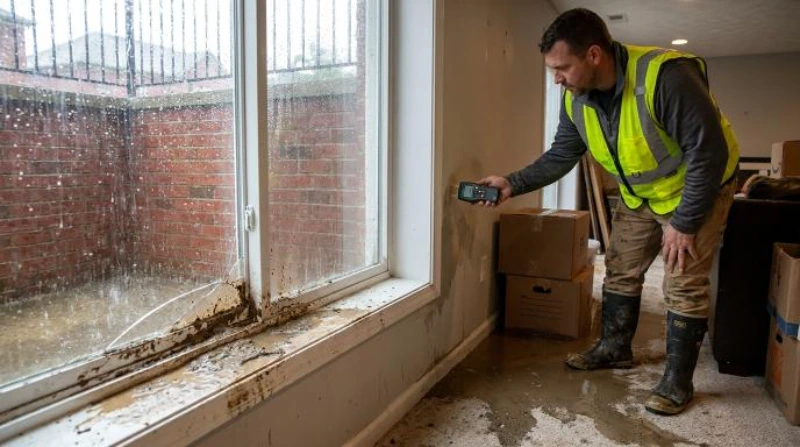
Trenton has one of the more diverse housing timelines of any Downriver city — brick homes from the early 1900s near Elizabeth Park, World War II-era construction in the city core, and 1950s and 1960s ranches in the newer residential areas. This diversity means the flood mechanism varies by neighborhood: older areas have cast iron waste stacks and clay tile laterals approaching 80 to 100 years of age, while the 1960s zones have the standard concrete block and 60-year clay tile combination found throughout Downriver Wayne County. Trenton calls are dispatched from our Dearborn flooded basement cleanup headquarters.
Floor drain backup in Trenton — even with no local rain — should be treated as Category 3 sewage. Stay out of the water, keep fans off and cut power to the basement at the panel. Our crew confirms the water category the moment we arrive.
Emergency Flood Cleanup in Trenton MI
Trenton's Detroit River position means flooding can begin under weather conditions that wouldn't trigger events elsewhere — a sustained river-level rise during a regional storm can push pressure into Trenton's combined sewer even as rain is still falling upstream. We cover all Trenton 48183 addresses 24 hours a day. The river zone blocks in particular benefit from immediate response because the hydraulic pressure events that cause their flooding can resolve and recur multiple times during an extended storm.
See our full 24/7 emergency response protocol →
Sewage Backup Cleanup in Trenton MI

Trenton's combined sewer system is among the older in Wayne County — the Elizabeth Park area's infrastructure dates to the early twentieth century. Older cast iron mains have less capacity margin than newer concrete installations and fail at lower CSO pressure thresholds. When the Detroit River rises and pushes pressure upstream through Trenton's system, the cast iron mains in the historic core are the first to reverse flow into basement drains. The IICRC S500 Category 3 protocol applies here as it does across all combined sewer communities.
Full Category 3 sewage backup protocol →
Basement Water Removal in Trenton MI
Water removal in Trenton's older housing stock requires attention to features absent in newer construction: original hardwood floors over basement ceilings, lath-and-plaster walls above grade that wick moisture from a wet basement, and century-old stone or brick foundation walls that absorb and release moisture differently than modern concrete block. Industrial extraction handles standing water. The drying period must account for these older materials' moisture behavior — which typically means longer drying windows and more test points per square foot.
Our complete water removal process →
Structural Drying in Trenton MI
Trenton's housing age range creates variable drying timelines. The 1950s and 1960s concrete block basements in the residential grid dry in standard 3 to 5 days at IICRC S500 drying protocol. The older Elizabeth Park area homes may require 6 to 8 days for stone or brick foundation walls, which hold and release moisture at a slower rate than concrete block. We adjust equipment placement and drying duration based on the specific construction type at each Trenton address.
How IICRC S500 structural drying works →
Mold Remediation in Trenton MI
Trenton's proximity to the Detroit River creates elevated baseline humidity compared to inland Wayne County communities — a pattern similar to Wyandotte. River-adjacent properties maintain higher ambient humidity year-round, which compresses the mold establishment window below the standard 24-to-48-hour estimate when a flood event adds wet materials to an already-humid environment. Older Trenton homes with less effective vapor barriers between the basement and the river-adjacent soil compound this effect.
Full IICRC S520 mold remediation protocol →
Trenton Neighborhoods We Serve
West Trenton — Detroit River / Channel Zone
The western blocks of Trenton run directly along the Trenton Channel of the Detroit River. Properties here experience the most direct river-influence flooding — hydraulic pressure from the channel reverses through combined sewer connections when the river rises. Some streets in this zone experienced flooding during the June 2021 FEMA disaster event before the combined sewer system even reached its 3.5-inch overflow threshold, purely from river-level pressure.
Elizabeth Park Corridor — Historic Core
Elizabeth Park and the historic core of Trenton include some of the oldest residential housing in Wayne County south of Detroit — homes from 1900 to 1940 with original cast iron drain stacks and deteriorating clay tile laterals connecting to century-old combined sewer mains. This area is also the lowest-elevation zone in Trenton, sitting closest to the river's high-water mark. During major rain and river-level events, Elizabeth Park residents experience flooding from multiple simultaneous sources.
East Trenton — Residential Grid
Trenton's residential grid east of Jefferson Avenue is the city's primary suburban core — 1950s and 1960s concrete block basements on standard Wayne County combined sewer infrastructure. Flood risk here is driven primarily by CSO backflow rather than direct river influence, placing it on the same mechanism as most Downriver communities but with the additional variable of river-level pressure during Detroit River high-water events.
North Trenton — Fort Street Corridor
North Trenton along Fort Street has a mixed commercial-residential character. Commercial impervious surfaces north of the residential core add storm water volume to the combined sewer during heavy rain. Residential streets off Fort Street are slightly elevated compared to the river zone, reducing direct river-influence flooding but still subject to combined sewer CSO events during the same storm conditions.
What Does Flooded Basement Cleanup Cost in Trenton?
Trenton cleanup costs follow Wayne County averages for the CSO-zone neighborhoods: $1,300 to $3,500 for clean water events, $2,300 to $5,500 for sump failure, $3,200 to $9,000 for unfinished basement sewage backup. The older housing in the Elizabeth Park corridor introduces a variable not present in newer cities: century-old cast iron drain stacks that may require replacement if the flooding exposed structural deterioration. We photograph and document drain infrastructure condition at no additional charge.
Why Wayne County Homeowners Call Us — Not a 1-800 Franchise
✓ Dryout Michigan
- Real person answers — no hold queue
- 60-minute response, Wayne County
- IICRC S500/S520 certified protocol
- Written estimate before work begins
- Insurance documentation from arrival
- No upselling of unnecessary demo
✗ Common complaints about franchise companies
- Callback promised, never comes
- Multiple visits to bring equipment
- Slow — working multiple projects
- Over-demolition to maximize insurance
- Communication gaps during drying
- Family moved to hotel for weeks