
Flooded Basement Cleanup Ecorse MI
Ecorse Creek Runs Through the City. The Detroit River Borders It. When Both Are High, Ecorse Basements Get Both.
Basement underwater? The Detroit River and Ecorse Creek can both hit flood stage at once, squeezing the city's sewer from two sides. Our flooded basement cleanup Ecorse MI crews respond 24/7 to every neighborhood.
Why Ecorse Basements Flood — Detroit River + Ecorse Creek Watershed
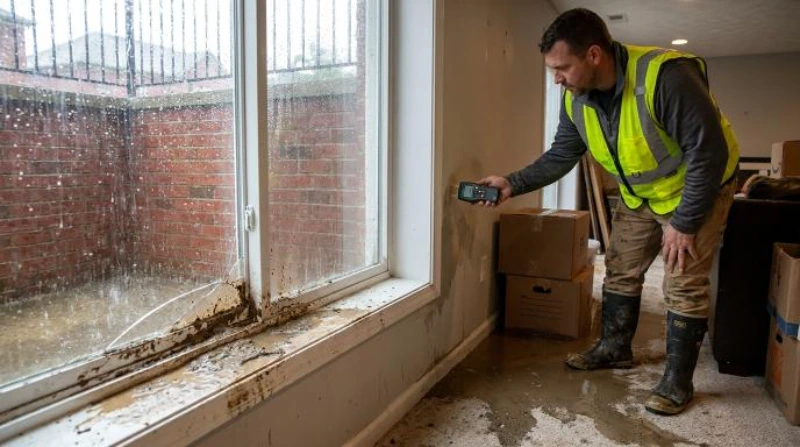
Ecorse has among the oldest housing in Wayne County — substantial portions of the city were built between 1900 and 1930, with additional development through the 1940s. Original cast iron drain stacks, early concrete and brick basement walls, and 80-to-100-year-old sewer laterals are found throughout the city. This infrastructure age places Ecorse at or beyond the failure threshold that cities like Inkster are approaching. We serve Ecorse from our Dearborn basement flood cleanup base on Rotunda Drive.
If the river and the creek are both high and your Ecorse basement is filling, assume it's Category 3 sewage — that's what CSO backflow carries. Don't wade in, don't run fans, and kill the basement circuit at the panel. Call us and we confirm the category on arrival.
Emergency Flood Cleanup in Ecorse MI
We cover all Ecorse 48229 addresses 24 hours a day. Ecorse's dual-water-body exposure means flooding can develop rapidly from multiple sources — calling immediately when water appears, rather than waiting to see if it will stop, is especially important in a city where two flooding mechanisms can be active at the same time.
See our full 24/7 emergency response protocol →
Sewage Backup Cleanup in Ecorse MI
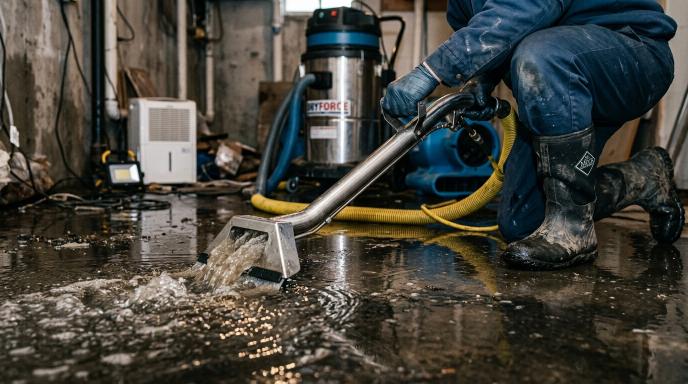
Ecorse's combined sewer is among the oldest in Wayne County. Cast iron mains from the early 1900s are at or beyond their designed service life. When the Detroit River and Ecorse Creek both exceed capacity — which happens simultaneously during the largest storms — Category 3 sewage reverses through these old mains and through every connected floor drain in the city. Full IICRC S500 protocol applies.
Full Category 3 sewage backup protocol →
Basement Water Removal in Ecorse MI
Ecorse's oldest housing — stone and early brick foundations from 1900 to 1920 — requires longer drying windows and more careful moisture assessment than standard concrete block. We assess foundation type on arrival. Stone foundations can hold moisture for 7 to 10 days even under continuous LGR drying. We document daily readings and adjust equipment accordingly.
Our complete water removal process →
Structural Drying in Ecorse MI
Ecorse's construction era range is the widest in Wayne County south of Detroit. Stone foundations from 1910: 7 to 10 days drying. Early brick from 1920s-1930s: 5 to 7 days. 1940s-1950s concrete block: 3 to 5 days. Daily pin meter readings at all test points logged and provided in writing.
How IICRC S500 structural drying works →
Mold Remediation in Ecorse MI
Ecorse's Detroit River proximity elevates baseline humidity — similar to Wyandotte, Trenton, and Riverview. The oldest Ecorse construction from the early 1900s has less effective moisture barriers than any other Wayne County community, meaning ambient basement humidity is higher at baseline. Post-flood mold risk is among the highest in Wayne County, and the 24-to-48-hour establishment window effectively compresses to 24 hours or less in summer conditions.
Full IICRC S520 mold remediation protocol →
Ecorse Neighborhoods We Serve
West Ecorse — Detroit River Zone
West Ecorse's blocks run directly along the Detroit River. River-level events that push hydraulic pressure through Trenton and Wyandotte's combined sewers do the same in Ecorse — and Ecorse's infrastructure is older than both. Properties here can flood from river-level pressure during events that barely register as rainfall locally.
Central Ecorse — Ecorse Creek Corridor
Ecorse Creek runs north-to-south through central Ecorse, a creek with its own documented flooding history separate from the Detroit River. When Ecorse Creek overflows — which NOAA gauge data shows occurs during most major rain events in this watershed — it adds CSO overflow pressure from the east while the river pushes pressure from the west. The central Ecorse corridor between these two water bodies receives combined pressure from both simultaneously.
East Ecorse — Southfield Road District
East Ecorse along Southfield Road is the most inland section of the city and has the lowest direct river and creek exposure. 1940s and 1950s construction here is slightly newer than the historic river core but still on original infrastructure approaching or exceeding 70 years of age.
North Ecorse — Lincoln Park / Allen Park Border
North Ecorse borders Lincoln Park and Allen Park — two cities with their own active flooding profiles. Combined sewer connections between these municipalities mean that during Wayne County-wide CSO events, North Ecorse can receive backpressure from the adjacent city systems in addition to Ecorse Creek's own overflow.
What Does Flooded Basement Cleanup Cost in Ecorse?
$1,100 to $3,200 clean water. $2,000 to $5,000 gray water. $2,800 to $8,500 Category 3 sewage unfinished. Older Ecorse construction from the 1910s and 1920s may have stone or early brick foundations that require longer drying windows and higher per-square-foot extraction costs.
Why Wayne County Homeowners Call Us — Not a 1-800 Franchise
✓ Dryout Michigan
- Real person answers — no hold queue
- 60-minute response, Wayne County
- IICRC S500/S520 certified protocol
- Written estimate before work begins
- Insurance documentation from arrival
- No upselling of unnecessary demo
✗ Common complaints about franchise companies
- Callback promised, never comes
- Multiple visits to bring equipment
- Slow — working multiple projects
- Over-demolition to maximize insurance
- Communication gaps during drying
- Family moved to hotel for weeks