⚠ Westland Flood Alert: Middle Rouge River backs up Westland's combined sewer every major rain season — Wayne County's 4th largest city faces this every spring and summer. Call now — (866) 838-7745.
24/7 Emergency Response — Westland MI 48185

Flooded Basement Cleanup Westland MI

The Middle Rouge River Made Westland. It Also Floods It Every Hard Rain Season.

Basement flooding? Westland was built around the Middle Rouge — when the river rises, pressure pushes back up your floor drain even if you can't see the river. Our flooded basement cleanup Westland MI crews respond 24/7.

🏅
IICRC CertifiedS500 & S520 Protocol
📋
Written Estimate FirstNo surprises
⚡
60-Min ResponseWayne County covered
🕐
24/7/365Same rate nights & weekends

Why Westland Basements Flood — Middle Rouge River + Henry Ford Drain
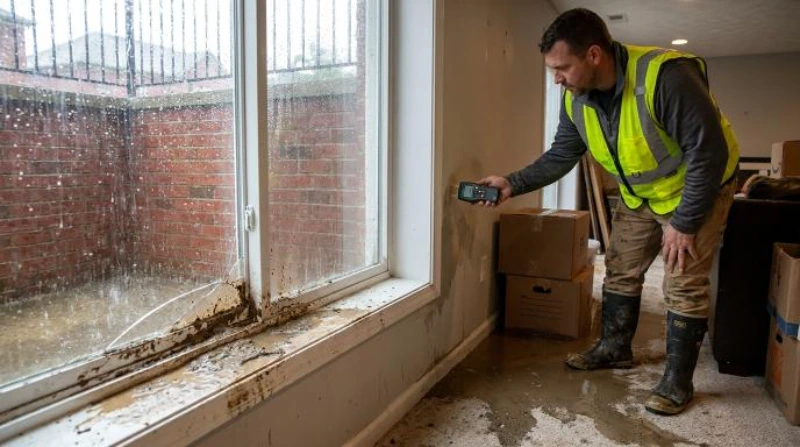
Water extraction from flooded Westland MI basement after Middle Rouge River + Henry Ford Drain overflow event
Industrial extraction in a Westland basement — Middle Rouge River overflow event
Westland was incorporated in 1966, carved directly out of Nankin Township during Metro Detroit's peak suburban expansion era. The city was built along and around the Middle Rouge River corridor — which seemed like an asset when planners were drawing streets in the 1960s and now presents the city's primary recurring flooding liability. When the Middle Rouge rises beyond capacity, the hydraulic pressure it creates pushes backward through every combined sewer lateral that crosses under the river or connects to the downstream system. Westland homeowners on those laterals don't see the river from their windows, but they feel the river through their basement floor drains.

The dominant housing type in Westland is the 1960s and 1970s ranch and split-level — concrete block basements, original clay tile lateral connections, and in many cases finished family rooms and carpeted rec spaces that dramatically increase cleanup scope after any Category 3 event. Wayne County's 2021 flood data shows Westland among the highest-volume Wayne County cities for reported basement flooding, reflecting both the Middle Rouge's direct influence and the age of the infrastructure throughout the city. Westland is served by the same certified crew behind our Dearborn flooded basement cleanup.

📍 What This Means For Your Westland Home

Water coming up your Westland floor drain after heavy rain is usually Middle Rouge sewer backflow, so treat it as Category 3 sewage. Keep out without protection, leave the fans off and shut off the basement circuit at the panel before you call.

Emergency Flood Cleanup in Westland MI

The Middle Rouge River's flooding pattern gives slightly more warning than drain-based events like Taylor — river levels typically build over 2 to 4 hours of sustained rain rather than the 90-minute threshold common to drain systems. But that warning window doesn't mean you should wait. By the time the river has been at flood stage for an hour, CSO backpressure has already propagated through the Westland combined sewer. Calling us when rain is still falling is correct. We dispatch to all Westland 48185 and 48186 addresses around the clock, Category 3 protocol on the truck.

See our full 24/7 emergency response protocol →

Sewage Backup Cleanup in Westland MI
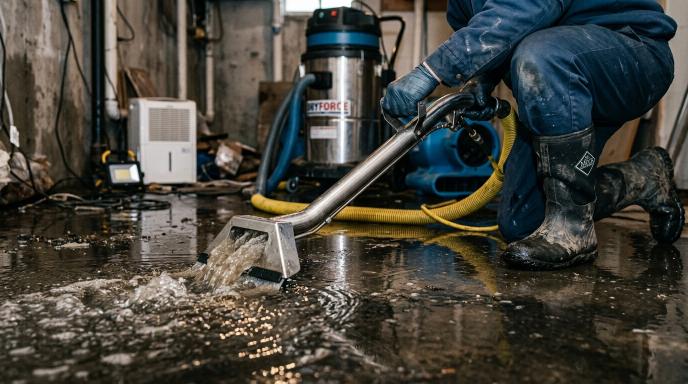
Dryout Michigan technician in Category 3 PPE performing sewage backup cleanup in Westland MI basement
Category 3 protocol — full PPE, sealed extraction, EPA-registered disinfectant

Westland's combined sewer system carries both storm water and household sewage in a single pipe network — the legacy infrastructure of 1960s suburban development throughout Wayne County. When the Middle Rouge overwhelms that system, raw sewage reverses through your basement floor drain. The IICRC S500's Category 3 classification covers exactly this scenario: gross contamination, unknown pathogens, full decontamination protocol required. We do not adjust the protocol based on how much water entered or how quickly you called. Category 3 requires Category 3 response. Every porous material that contacted the sewage comes out. Every hard surface receives proper disinfectant dwell time. You receive written clearance at completion.

Full Category 3 sewage backup protocol →

Basement Water Removal in Westland MI

Westland's 1960s concrete block construction holds water differently than poured concrete would — the block itself is porous, absorbing moisture into voids within the block material rather than just holding surface moisture. Industrial extraction pulls what the eye can see. LGR dehumidification pulls what the extraction equipment leaves behind, drawing moisture from the block walls, the floor slab, and the wood framing elements throughout the drying period. Getting a Westland basement to certified dry requires continuous industrial drying — typically 3 to 5 days — not just surface extraction.

Our complete water removal process →

Structural Drying in Westland MI

Westland's middle housing era — primarily 1965 to 1978 — means basements often have finished elements layered on top of the original block: paneling over block walls, carpet over concrete slab, drop ceilings over floor joists. When finished materials must be removed after a Category 3 event, the removal exposes the structural materials beneath, and those materials typically need the full 3-to-5-day drying period from the date of removal — not from the date of the flood. Every day of finished-material-in-place is a day of moisture absorption into the structural layer behind it.

How IICRC S500 structural drying works →

Mold Remediation in Westland MI

Federal research from the EPA and CDC places mold establishment at 24 to 48 hours on wet building materials under standard conditions. Westland's summer basement temperatures — typically 65 to 75 degrees Fahrenheit — and the compressed 1960s housing layouts that limit inter-wall ventilation create near-optimal mold conditions within hours of a flood event. Finished Westland basements that didn't get professional extraction within the first 24 hours almost certainly have mold establishing in the wall cavity insulation behind the paneling or drywall, even if the visible surfaces look clean. Post-remediation air sampling is the only way to confirm clearance.

Full IICRC S520 mold remediation protocol →

Westland Neighborhoods We Serve

ZIP 48185 — North

North Westland — Michigan Ave Corridor

Michigan Avenue runs east-west through North Westland as the city's primary commercial spine. The Henry Ford Drain, a regional channel that intercepts storm water from the northern watershed before it reaches the Middle Rouge, crosses beneath the Michigan Avenue corridor. When the drain exceeds capacity, it connects hydraulically to the combined sewer system that serves these residential streets — adding overflow volume to an already-stressed network.

ZIP 48185 — Central

Central Westland — Warren Road Residential Grid

The residential core of Westland is concentrated in the grid streets between Warren Road and Plymouth Road. Concrete block basements from the late 1960s sit on clay tile laterals now approaching 60 years of age. This zone has the highest density of reported basement flooding events per street in Westland. CSO backpressure from the Middle Rouge reaches this grid through multiple connection points, making it difficult to isolate flooding to a single cause during major storm events.

ZIP 48185 — South

South Westland — Hines Drive Parkway

South Westland follows the Middle Rouge River Park corridor — Wayne County's linear greenway along the river. The park's open space creates a buffer, but residential properties on the park's eastern edge sit closest to the river channel and experience the most direct correlation between river level rise and basement flooding. Hines Drive is a flood-prone road that Wayne County has documented as experiencing surface overflow during major rain events.

ZIP 48185 — West/East

East Westland — Wayne Road / Inkster Border

The Inkster Road boundary zone between Westland and Inkster experiences combined-pressure flooding during major storm events: Middle Rouge CSO pressure from the west and aging Inkster infrastructure from the east. Split-level and ranch homes in this corridor have above-average finished-basement rates — family rooms and recreation spaces from the 1970s that add thousands of dollars to cleanup scope after a sewage event.

What Does Flooded Basement Cleanup Cost in Westland?

Westland has one of the highest average finished-basement cleanup costs in Wayne County, not because the flooding itself is worse but because 1970s homeowners invested in finished family rooms and carpeted spaces that now sit below the waterline during CSO events. An unfinished Westland basement — Category 3 sewage event — typically runs $3,000 to $8,500. A finished basement with carpet, drywall, and drop ceiling runs $6,000 to $15,000. Clean water pipe failures: $1,300 to $3,500. Sump failure: $2,400 to $5,500.

Free instant estimate with our cost calculator →

People Also Ask

Why Wayne County Homeowners Call Us — Not a 1-800 Franchise

✓ Dryout Michigan

  • Real person answers — no hold queue
  • 60-minute response, Wayne County
  • IICRC S500/S520 certified protocol
  • Written estimate before work begins
  • Insurance documentation from arrival
  • No upselling of unnecessary demo

✗ Common complaints about franchise companies

  • Callback promised, never comes
  • Multiple visits to bring equipment
  • Slow — working multiple projects
  • Over-demolition to maximize insurance
  • Communication gaps during drying
  • Family moved to hotel for weeks

Westland Flooded Basement — FAQ

Why does Westland flood so often from the Middle Rouge River?
Westland was built directly along the Middle Rouge corridor during the 1960s suburban expansion. The city's combined sewer system was sized for the population and impervious surface that existed at incorporation — not for the current city. As Westland developed, the ratio of impervious surface to sewer capacity grew, and the Middle Rouge River's overflow threshold now triggers CSO backflow into basements across the city every major rain season. The river created the opportunity to build here. The river is also what backs up into basements when it rains hard.
Is Westland basement flooding covered by homeowners insurance?
Standard Michigan homeowners policies exclude sewer backup and surface flooding. You need a sewer backup rider — typically $10 to $30 per month — added separately. Many Westland homeowners discovered this gap after major flooding events. We document all damage from the moment we arrive: written estimate, photographs, and moisture readings at every test point. This documentation supports any claim process, including insurance, municipal assistance, or FEMA programs that may apply.
How long does Westland basement cleanup take?
Extraction takes 2 to 6 hours depending on standing water volume. Structural drying runs 3 to 5 days for unfinished concrete block and up to 7 days for finished basements where material removal is required. The clock on drying starts from when extraction is complete, not from when the flood occurred — which is another reason prompt response matters. We provide daily moisture readings in writing and remove equipment only when certified dry standard is reached.
Can I save my Westland finished basement after a sewer backup?
The hard surfaces — concrete block, tile, painted concrete — can be decontaminated and saved. Porous materials that contacted Category 3 sewage water cannot. This includes carpet and pad, drywall to the waterline, insulation, and paneling. The IICRC S500 standard does not provide an exception based on dollar value or how long the water was present. These materials must come out to achieve proper decontamination. We remove them under proper protocol and provide documentation for your insurance claim.
How high is the mold risk after Westland basement flooding?
Above Wayne County average for finished basements. The insulation and air gap between paneling or drywall and the concrete block wall creates ideal mold conditions after any wet event — warm, dark, and still moist long after the visible water is gone. We have seen Westland finished basements require full mold remediation three weeks after the original flood event because the structural layer behind the paneling never properly dried. Professional extraction and documented drying is the only reliable prevention.
What makes Westland flooding different from Dearborn flooding?
The primary difference is the flooding mechanism. Dearborn flooding is primarily driven by the Rouge River watershed and city-specific combined sewer overflows. Westland flooding is driven by the Middle Rouge River directly — a river that actually flows through the city rather than adjacent to it. This means Westland flooding correlates more directly with river level rise and has slightly longer warning windows during storms, but also means the river's influence on CSO backpressure is more direct and consistent year over year.
Do you serve Westland MI for flooded basement cleanup?
Yes. Westland ZIPs 48185 and 48186 are in our Wayne County coverage area. 24/7 dispatch, IICRC S500 protocol, 60-minute response target.
What causes Westland basement flooding?
Westland drains into the Middle Rouge River watershed. During major storms, the Rouge River and its tributaries rise faster than the system can outflow, causing storm drain surcharge and basement flooding. Westland also has significant areas of older housing stock — 1950s and 60s construction — with aging clay tile lateral drain lines. Cracked laterals allow both groundwater intrusion and CSO backpressure depending on storm severity.
Should I replace my sump pump after a Westland basement flood?
If your sump pump failed during a flood event — yes, immediately. But the type of pump matters. A standard pump without battery backup is useless during a power outage, which often accompanies the same storms that cause sump pit overflow. We recommend a primary pump with a battery-backup secondary. Before replacing, have the discharge line inspected — a blocked discharge is the most common cause of pump failure when the power is fine.
👷
Content Reviewed By
James Novak, IICRC WRT & ASD Certified
Lead Water Damage Restoration Technician · Dryout Michigan
IICRC WRT #WRT-48291 · IICRC ASD #ASD-32817
Licensed Contractor · Serving Dearborn MI & Wayne County since 2019
IICRC S500 & S520Licensed Contractor

All technical claims are sourced from IICRC standards (S500, S520), EPA guidelines, CDC health advisories, and Wayne County CSO documentation. Last reviewed: October 2026.

Related Pages

Complete Dryout Michigan Resource Library

Emergency Services
Wayne County Cities
Guides & Tools
Our Location

Head Office

📍
Address
14441 Rotunda Dr
Dearborn, MI 48120
Get Directions →
📞
Phone — 24/7 Emergency
(866) 838-7745
Dryout Michigan — Head Office
14441 Rotunda Dr, Dearborn, MI 48120
We Cover All of Wayne County

Flooded Basement Cleanup — Every Wayne County City

60-minute response · IICRC S500 certified · Same rate nights & weekends · Dearborn HQ · Complete Wayne County Guide

Your Westland Basement Is Flooded.
Middle Rouge River Did This — We Respond Tonight.

The Middle Rouge built Westland's suburbs and backs up its sewers every flood season. We cover all of Westland 48185 and 48186 — 24 hours a day, same rate nights and weekends, IICRC S500 protocol on every truck.

No extra charge nights or weekends Written estimate before work begins IICRC S500 & S520 certified Category 3 protocol on every truck
📞 (866) 838-7745 — Call Now
Dryout Michigan · 14441 Rotunda Dr, Dearborn MI 48120 · info@dryoutmichigan.com
✓
IICRC S500 CertifiedWater Damage Restoration
✓
IICRC S520 CertifiedMold Remediation Protocol
🏅
WRT #WRT-48291Water Restoration Tech
🏅
ASD #ASD-32817Applied Structural Drying
⚖️
Licensed ContractorFully Insured & Bonded
⭐
Serving Since 20197+ Years in Metro Detroit
🕐
60-Min ResponseWayne County — 24/7/365
60-Min Response (866) 838-7745