⚠ Dearborn Flood Alert: CSO capacity 3.5"/day. Mold within 24 hours. Call now.
24/7 Emergency Response — Dearborn MI

Mold Remediation Dearborn MI — IICRC S520 Protocol

Mold showing after a flood? It's been growing inside materials for days already. Our mold remediation Dearborn MI work follows IICRC S520 — containment, HEPA scrubbing, antimicrobial treatment and a clearance document for your insurance file.

🏅
IICRC CertifiedS500 & S520
📋
Written Estimate First
🕐
24/7/365
🛡️
Licensed Contractor
IICRC S520 Protocol

Mold Remediation After Basement Flooding in Dearborn MI
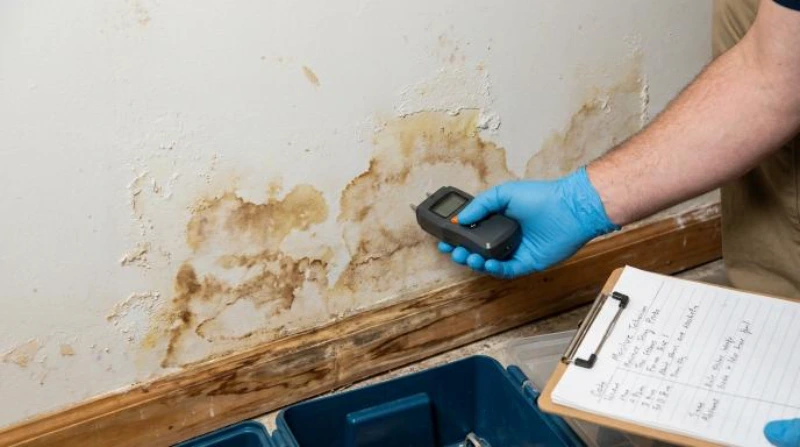
Moisture meter reading on Dearborn basement wall showing water staining and mold damage after basement flooding
Moisture and mold assessment — wall staining in Dearborn basement

The EPA and CDC both confirm that mold can colonise wet building materials within 24 to 48 hours. The IICRC S520 Standard for Professional Mold Remediation establishes this as the remediation industry benchmark. In Dearborn during summer months — when basement temperatures typically stay between 65 and 80 degrees Fahrenheit — the EPA notes mold grows optimally in exactly that range, pushing colonization toward the faster end of the window. Mold work usually follows a flood, so if water is still present, start with our Dearborn basement flood cleanup service.

Visible mold is always the late signal. Growth starts inside materials — inside the paper facing of drywall, within the fiber batting of insulation, along the wood fibers of subfloor joists — before it reaches any surface you can see. By the time mold is visible on your Dearborn basement wall, it has been growing for days. The approach of "let me wait and see if mold appears" guarantees that remediation will be more extensive and more expensive than prevention.

If professional extraction and drying did not begin within 24 hours of flooding, antimicrobial treatment is necessary even before mold is visible. This is not aggressive upselling — it is what the IICRC S520 standard requires, and what any qualified independent inspector would recommend. We include this in our assessment and document it for your insurance file.

1

Mold assessment

Visual inspection plus moisture mapping identifies active growth areas and at-risk materials. Air sampling available for insurance documentation when required.

2

Containment

IICRC S520 requires containment of the remediation area to prevent cross-contamination. Negative air pressure maintained. Adjacent areas protected.

3

Material removal

All porous materials with active mold growth removed per IICRC S520 — drywall, insulation, carpet. These cannot be cleaned; they must be removed and disposed of as contaminated material.

4

HEPA air scrubbing

HEPA-filtered air scrubbers run continuously during and after remediation. HEPA filtration captures mold spores at 0.3 microns — standard filters miss them entirely.

5

Antimicrobial treatment

EPA-registered antimicrobial applied to all treated surfaces with proper dwell time. Kills residual mold and prevents recolonization on cleaned structural surfaces.

6

Air quality verification

Post-remediation air sampling confirms spore counts are within acceptable range before containment is removed. Clearance documentation provided for insurance file.

Dearborn's Mold Risk Profile
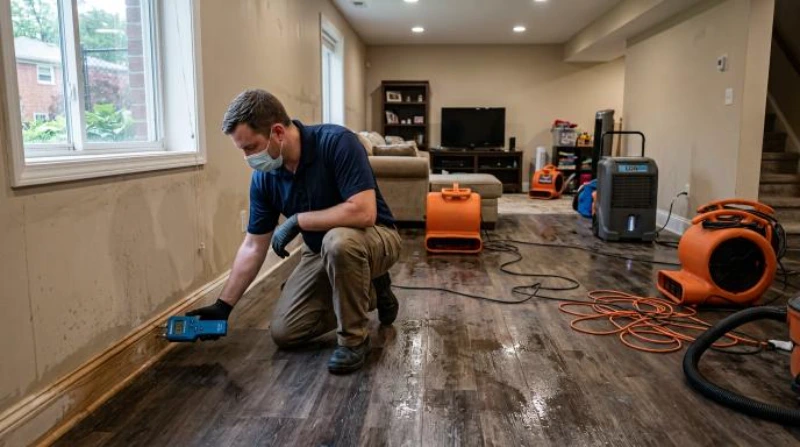
Restoration technician checking moisture levels in hardwood basement floor with air movers running in Dearborn MI
Floor moisture assessment with running air movers — Dearborn job

Dearborn's combination of summer heat, flooding frequency, and aging housing stock creates elevated mold risk compared to newer suburban markets. The pre-1960 housing stock that makes up most of Dearborn's residential neighborhoods uses organic building materials — wood framing, paper-faced drywall, cellulose insulation — that mold colonizes faster than modern materials. Combined sewer overflow events introduce mold spores directly into basements along with sewage, seeding growth before structural drying begins.

The city's June 2021 FEMA Disaster 4607 event — 20,000 homes flooded in under five hours — created a mass-mold-remediation event across Dearborn. Homes that were not professionally dried within the 24–48 hour EPA window required mold remediation in addition to water damage cleanup, adding thousands to the total cost. The pattern has repeated in subsequent storm events: homeowners who call within hours pay for cleanup. Those who wait pay for cleanup plus remediation.

⚠ Signs mold remediation may already be needed

Musty or earthy odor — especially after the basement "dried" | Visible discoloration on walls, floor joists, or subfloor | Dark staining at the base of drywall panels | Allergic symptoms when in the basement space | Water sat more than 48 hours before professional drying began

People Also Ask

Why Wayne County Homeowners Call Us — Not a 1-800 Franchise

✓ Dryout Michigan

  • Real person answers — no hold queue
  • 60-minute response, Wayne County
  • IICRC S500/S520 certified protocol
  • Written estimate before work begins
  • Insurance documentation from arrival
  • No upselling of unnecessary demo

✗ Common complaints about franchise companies

  • Callback promised, never comes
  • Multiple visits to bring equipment
  • Slow — working multiple projects
  • Over-demolition to maximize insurance
  • Communication gaps during drying
  • Family moved to hotel for weeks

Mold Remediation Dearborn MI — FAQ

How fast does mold grow after a basement flood in Dearborn MI?
The EPA and CDC confirm mold can begin growing on wet building materials within 24 to 48 hours. In Dearborn summer basements — typically 65–80°F — the EPA notes this is the optimal temperature range for mold growth, pushing colonization toward the 24-hour end of the window. Growth starts inside materials before it reaches the surface.
What is the IICRC S520 mold standard?
The IICRC S520 Standard and Reference Guide for Professional Mold Remediation governs professional mold cleanup. It defines the containment requirements, material removal protocols, HEPA filtration requirements, antimicrobial application procedures, and air quality verification standards that qualified remediators must follow. It is the document insurance adjusters and independent inspectors use to evaluate remediation work.
Can I clean mold myself in my Dearborn basement?
EPA guidance allows homeowners to clean small mold areas — typically defined as under 10 square feet — on non-porous surfaces using appropriate cleaning agents. For any mold on drywall, insulation, carpet, or wood framing; any mold resulting from sewage backup; or any area exceeding approximately 10 square feet, professional IICRC S520 remediation is recommended by both the EPA and CDC.
Does homeowners insurance cover mold remediation in Dearborn?
Coverage depends on the cause. Mold resulting from a covered water damage event (burst pipe) may be covered under the same claim. Mold resulting from sewer backup is typically excluded without a sewer backup rider. Mold resulting from gradual seepage or long-term neglect is typically excluded. We document everything from arrival to maximize your claim under whatever coverage applies.
How long does mold remediation take in Dearborn?
Small area remediation (single wall section, one room) typically takes 1 to 3 days. Larger events requiring extensive material removal take 3 to 7 days or more. Post-remediation air sampling verification adds 24–48 hours. Timeline depends on scope, material types, and whether structural drying needs to run concurrently.
When does mold start after a Dearborn basement flood?
The EPA and CDC are consistent: mold growth begins on wet building materials within 24 to 48 hours. In Dearborn summer conditions — 65–80°F in a basement, 70–80% relative humidity — the timing may be even shorter. Mold growth starts inside drywall and insulation before it becomes visible on the surface. By the time you see white or black mold on your basement walls, growth has been progressing inside materials for 2–5 days. Visible mold is late-stage, not early-stage.
Which is better for killing mold — bleach or vinegar?
Neither is adequate for basement flood mold remediation. Consumer bleach kills surface mold but does not penetrate porous materials — the mold root system (hyphae) inside drywall survives bleach application. Vinegar is marginally effective on non-porous surfaces. IICRC S520 requires: physical removal of affected materials (drywall, insulation, carpet) rather than surface treatment, HEPA air scrubbing to capture airborne spores, commercial antimicrobial application on all structural surfaces, and air quality testing to confirm clearance. Surface chemicals are not a substitute for this protocol.
How do I know if there is mold behind my Dearborn basement drywall?
You usually cannot see it until the problem is advanced. Indicators: musty odor that persists after drying, visible staining at wall bases, drywall that feels soft or bows, discoloration around nail heads, or health symptoms (respiratory irritation, allergy-like symptoms) when in the basement. Professional thermal imaging and moisture meters can detect elevated moisture behind finished walls where mold grows. If your basement flooded and walls were not dried by professionals within 48 hours, assume mold is present behind finished walls until proven otherwise.
What is the difference between mold removal and mold remediation?
"Mold removal" is a consumer marketing term. "Mold remediation" is the professional process defined by IICRC S520. Remediation includes: assessment and containment to prevent spore spread, physical removal of all affected materials (not surface treatment), HEPA air scrubbing during and after removal, antimicrobial treatment of structural surfaces, and post-remediation verification testing. A company that "removes" mold by spraying without removing contaminated materials has not remediated — they have covered the problem.
Is my flooded basement Category 1, 2, or 3 water?
Under IICRC S500, floor drain backup from a combined sewer overflow event is Category 3 — the most hazardous classification. It contains raw sewage, E. coli, Hepatitis A, Norovirus, and over 120 other viruses. Do not enter without PPE. Burst pipe water is usually Category 1 (clean). Sump pump failure water is typically Category 2 (gray water). Category 3 requires full decontamination — not just drying.
👷
Content Reviewed By
James Novak, IICRC WRT & ASD Certified
Lead Water Damage Restoration Technician · Dryout Michigan
IICRC Water Damage Restoration Technician (WRT) #WRT-48291
IICRC Applied Structural Drying Technician (ASD) #ASD-32817
Licensed Contractor · Serving Dearborn MI since 2019
IICRC Water Damage Restoration Applied Structural Drying IICRC S500 & S520 Licensed Contractor
Related Pages

Complete Dryout Michigan Resource Library

Emergency Services
Neighborhoods
Guides & Tools
Our Location

Head Office

📍
Address
14441 Rotunda Dr
Dearborn, MI 48120
Get Directions →
📞
Phone — 24/7 Emergency
(866) 838-7745
🕐
Hours
24/7/365 — No extra charge nights or weekends
🗺️
Service Area
All Dearborn ZIPs: 48120 · 48121 · 48123 · 48124 · 48126 · 48128
+ Dearborn Heights · Allen Park · Lincoln Park · Wayne County
📍
Dryout Michigan — Head Office
14441 Rotunda Dr, Dearborn, MI 48120
Coverage Area

Flooded Basement Cleanup — All Wayne County Cities

Your Dearborn Basement Is Flooded.
We're Available Right Now.

Visible growth or not — if your Dearborn basement flooded in the past 48 hours, the mold risk is already active. We serve all Dearborn ZIP codes around the clock with IICRC S520 protocol on the truck.

No extra charge nights or weekends Written estimate before work begins IICRC certified — S500 & S520 Insurance docs from arrival Free on-site assessment
📞 (866) 838-7745 — Call Now
Dryout Michigan · Serving Dearborn MI & Wayne County · info@dryoutmichigan.com
✓
IICRC S500 Certified Water Damage Restoration
✓
IICRC S520 Certified Mold Remediation Protocol
🏅
WRT #WRT-48291 Water Restoration Tech
🏅
ASD #ASD-32817 Applied Structural Drying
⚖️
Licensed Contractor Fully Insured & Bonded
⭐
Serving Since 2019 7+ Years in Metro Detroit
🕐
60-Min Response Wayne County — 24/7/365
60-Min Response (866) 838-7745